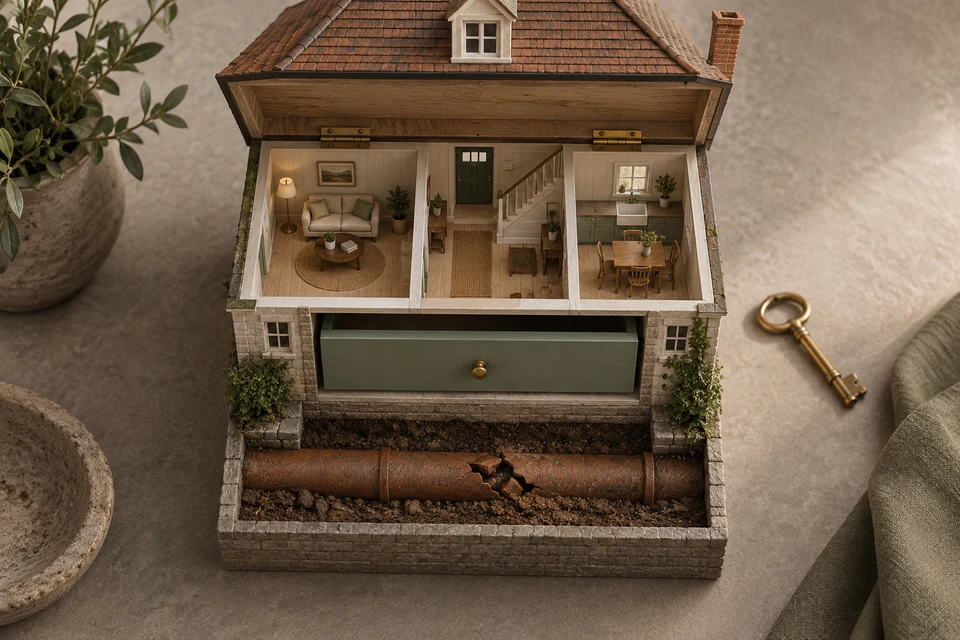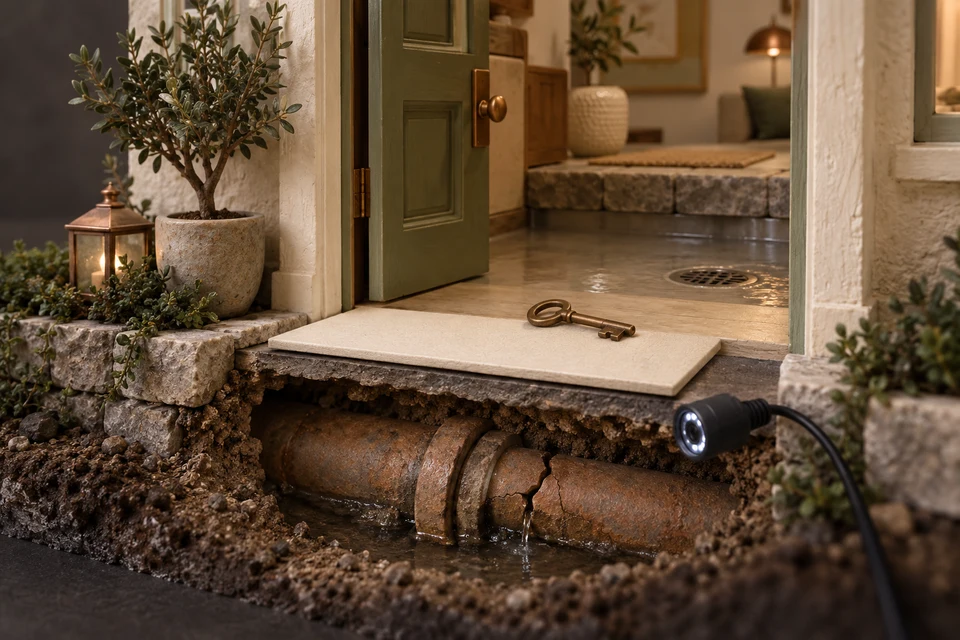
A relined sewer line can be good news for a Calgary buyer, but only for the length the liner actually covers. Ask for the invoice, the before and after footage and the start and end distances of the liner. Any section left unlined, such as the building drain under the slab, still needs pricing: as a 2026 planning estimate, a short remaining run or single defect often falls in the $4,500 to $16,000 range.
- A City record showing CIPP means the City section was relined; the private section may still be the original pipe.
- Relined City-side records in Calgary jump in the 2010s and 2020s, and the date on a CIPP record is usually the relining date.
- A liner follows the host pipe, so an existing belly is usually still a belly after lining.
- The value of a private-side liner depends on paperwork: length covered, footage before and after, the warranty and whether it transfers.
- Price the unlined remainder separately and add it to the budget; do not treat 'relined' as 'replaced'.
01 /What does 'relined' actually mean on a Calgary listing?
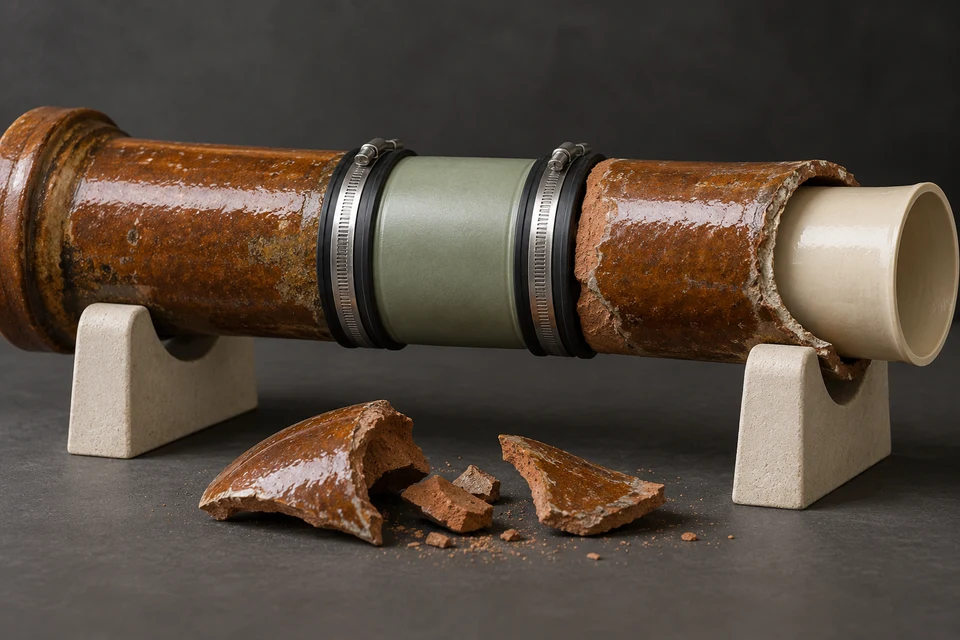
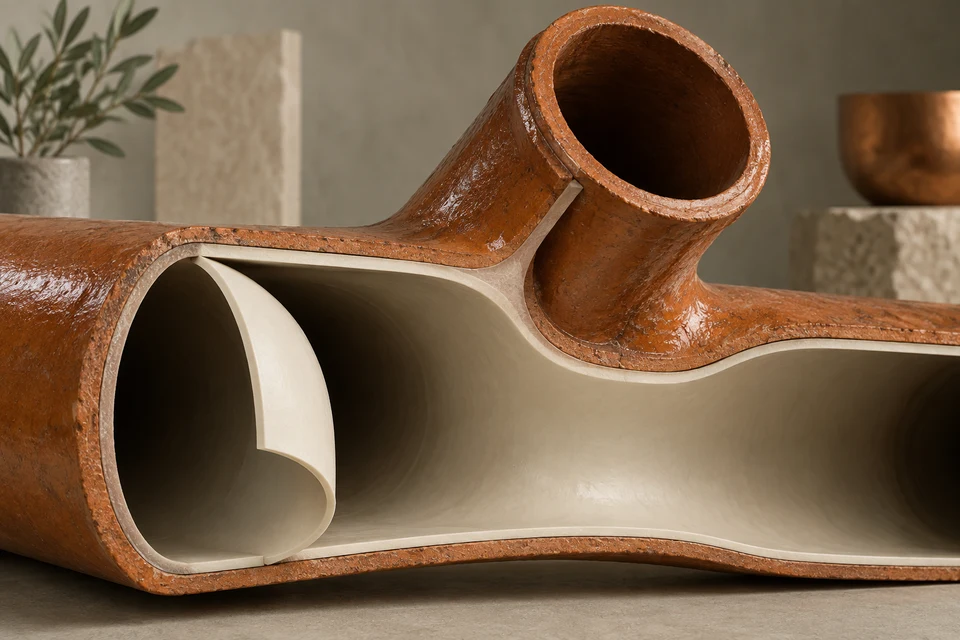
Relined almost always means a cured-in-place pipe liner, known as CIPP: a resin-saturated tube is inserted into the old pipe, pressed against its walls and cured until it hardens into a new pipe inside the old one. The original clay tile or cast iron stays in the ground as a host. Done well, the liner seals the joints roots used to enter and bridges small cracks.
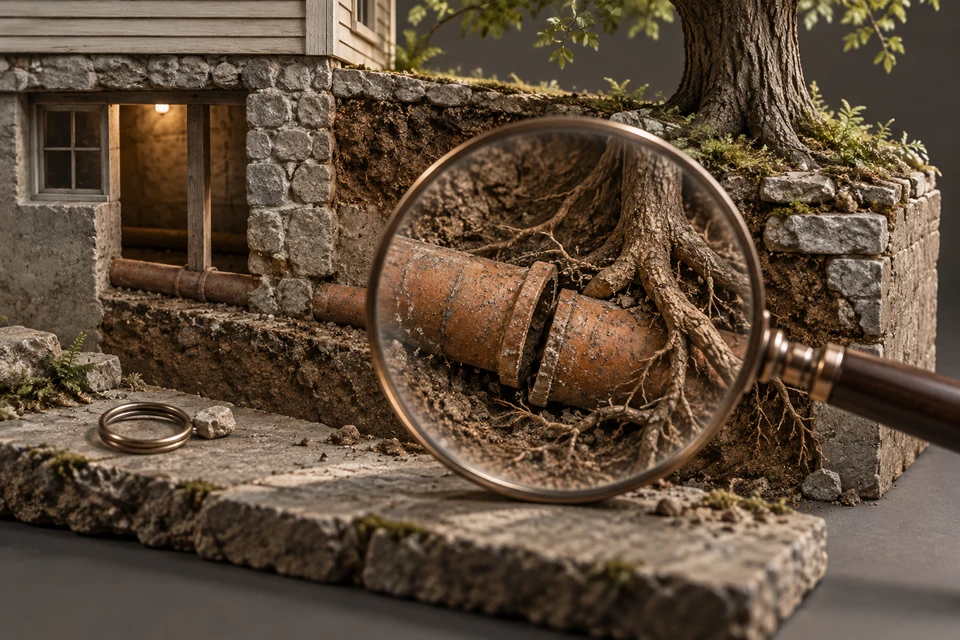
The word can refer to two different pieces of pipe, and buyers should find out which. The City of Calgary's public sanitary service line data describes the section from the main to the property line as owned and maintained by the City, and the section from the property line to the house as the homeowner's. The City also runs a Sanitary Lateral Lining Program, which it describes as installing liners inside existing sanitary service pipes to extend their life, with each connection out of service for about three hours during the work.
| Source of the claim | Which section it describes | What it tells a buyer |
|---|---|---|
| City open data shows CIPP for the address | City section only, main to property line | The street side was relined; nothing about the private side |
| Seller has an invoice for private lining | Private section, over the length stated | Useful if the invoice gives distances and footage exists |
| Listing says 'sewer relined' with no records | Unknown | A claim to verify, not a fact to price |
| Both City record and private invoice | Potentially the whole path | Check for a gap or a step at the property line |
02 /How common are relined sewer lines in Calgary?
Still uncommon citywide, but concentrated in some older communities. In the City's open data, 4,113 of 367,397 City-side service lines, about 1.1%, carry the CIPP code. Because the recorded date for a CIPP line is usually the date it was relined, the decade counts show when relining happened rather than when the pipe was first laid: 832 CIPP records are dated in the 2010s and 3,153 in the 2020s.
| Community | Service lines | % CIPP | Median recorded year |
|---|---|---|---|
| Highwood | 865 | 22.1 | 1956 |
| Glendale | 972 | 19.9 | 1958 |
| University Heights | 483 | 19.9 | 1965 |
| Rosemont | 482 | 16.6 | 1958 |
| Crescent Heights | 1,395 | 16.0 | 1965 |
| Glamorgan | 1,237 | 12.5 | 1959 |
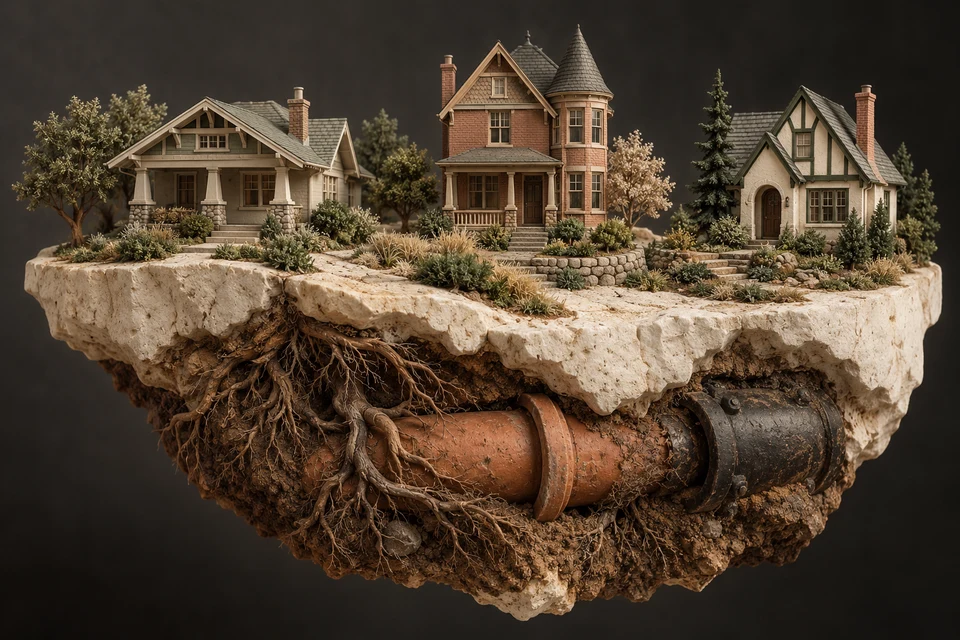
If a house in one of these communities shows a CIPP record, the City section in front of it has probably been renewed recently. The private pipe behind it may be the same age as the house. That combination is common enough that it deserves its own line in the budget rather than a sigh of relief.
03 /What should I ask the seller for when a line has been relined?
A liner is only as reassuring as the records behind it. Ask through your REALTOR® for the following, and treat missing items as gaps to price rather than reasons to panic:
- The invoice, showing the address, date, method and the length lined in metres.
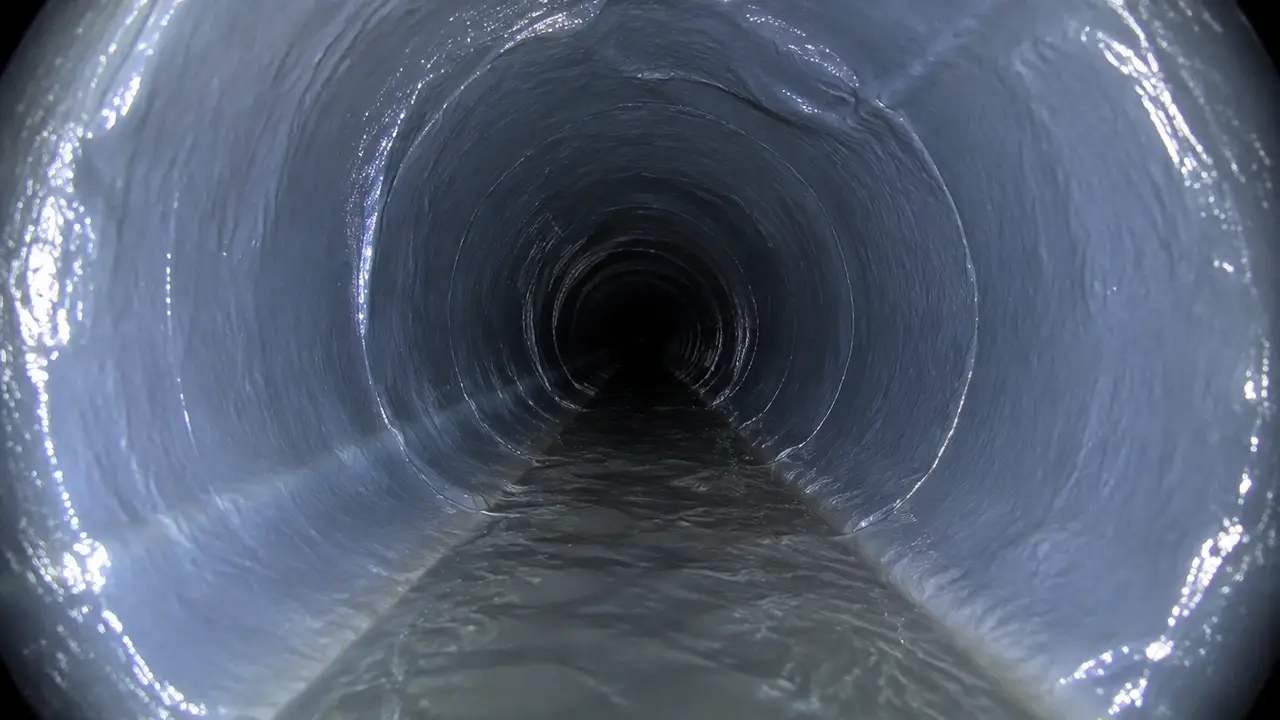
- Footage from before and after, ideally with distance counters, so you can see what the liner was installed over and how it finished.
- Start and end points, such as 'from the basement cleanout at 0 m to 17.5 m', which tells you whether the building drain and the wall crossing were included.
- The warranty document, its length, what it covers and whether it transfers to a new owner.
- Any permit record. The City says a plumbing permit is required when water and sewer lines in or around the home are replaced; ask whether one was issued for the lining and confirm with the City whether it applied.
- Any later clearing or backups, which would suggest a problem at the ends or a connection.
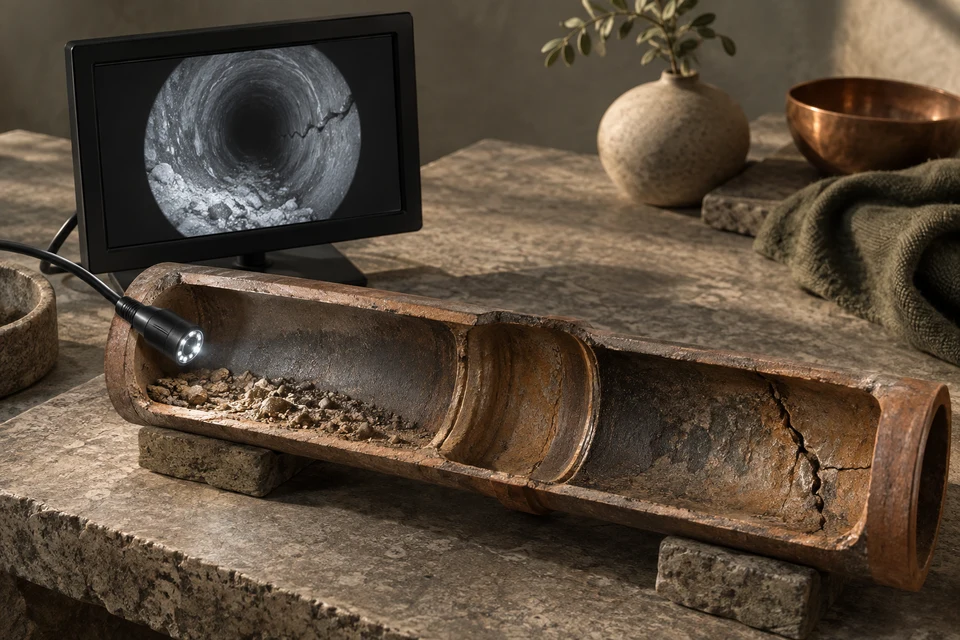
Your own scope then checks the liner against those records. Scope booking itself is covered at SewerScope.ca; what matters here is that the camera run should reach both ends of the liner so you can compare it with the seller's after-video.
04 /What problems can a relined line still have?
A liner fixes the leaks, root entry points and minor cracks in the pipe it covers. It does not change where the pipe runs or how it slopes, and the sections it does not cover keep their original condition. These are the findings that matter when pricing a relined line:
| Finding | What it means | Budget effect |
|---|---|---|
| Unlined section at the house end | Building drain or wall crossing left as original pipe | Price that section separately |
| Unlined gap near the property line | Private and City liners do not meet | Possible spot repair; report City-side issues to 311 |
| Belly still holding water | The liner followed an existing sag | Lining cannot correct grade; open cut or a spot dig may be needed later |
| Wrinkles or folds in the liner | Often cosmetic; large ones can catch solids | Ask the installer or a second contractor to assess from footage |
| Liner lifting or separating at an end | The seal at the end may have failed | Usually a localized repair |
| Branch connection blocked or rough | A reinstated connection was not fully opened | Usually a reinstatement or cutting visit |
The same caution applies to sags on any line: reading a sewer scope report as a buyer explains how to judge whether water standing in the pipe is minor or serious.
05 /How do I price the part that was not relined?
Price the remainder as its own small job. The setup cost of any method is a large share of a short run, so a few unlined metres do not cost a few metres' worth. Using the Calgary estimator's ranges:
| Remaining section | Likely approach | Planning range |
|---|---|---|
| One defect in an unlined stretch | Spot repair | $4,500–$12,000 |
| 6 m unlined, reachable from a cleanout | Lining setup plus 6 m | $6,400–$15,900 |
| 6 m unlined under a finished basement floor, dug | Spot repair plus finished-floor allowance | $6,500–$18,000 |
| Belly under the lined section | Open cut of the affected length | Quote from footage; open cut starts at $6,000–$11,000 setup |
If the whole private line is lined, recent and well documented, the remaining budget can be close to maintenance level, similar to a clean PVC line. If the liner covers only part of the run, add the leftover section to your reserve, as described in what to budget when buying an older Calgary home.
06 /How does the Home Buyer Sewer Risk Check treat a relined line?
The Home Buyer Sewer Risk Check adds no material points for CIPP, the same as PVC, and adds two points when the year is before 1980. When the address lookup fills in a CIPP record, the year it fills is usually the relining date, so a 1958 house can appear as a 2021 install. If the private side has not been relined, enter the year the house was built so the age point reflects the pipe you would actually own.
For a private-side liner with full records, entering CIPP and the lining year is fair. For a City-side record only, the more honest entry is the original material, or unknown, and the house's build year. Then compare the result with the Calgary Replacement Cost Estimator, and request quotes for any unlined section before your condition deadline.
FAQQuestions people ask
Is a relined sewer line as good as a new one?
For the length it covers, a well-installed liner seals joints and cracks much like new pipe. It keeps the old pipe's slope and route, and any unlined section keeps its original condition.
What does CIPP mean on Calgary's sewer map?
Cured-in-place pipe, a liner cured inside the old pipe. On the City's data it describes only the City section from the main to the property line, and the date is usually when it was relined.
The City relined the sewer in front of the house. Is my side done too?
Not necessarily. The City's record covers the City-owned section. Ask the seller for private-side records and scope the private line.
Does a sewer liner warranty transfer to the new owner?
Some do and some do not. Ask for the warranty document and check its transfer terms before relying on it.
Can a liner fix a sag in the sewer line?
Generally no. A liner follows the host pipe, so a belly usually remains after lining and may need a dig to correct the grade.
Should a relined line change my offer?
Only after you know how much of the line it covers and what the footage shows. Price any unlined remainder and discuss the result with your REALTOR® and lawyer.
NETWORKGo deeper across the HAUSE Sewer network
Sewer pipe lining cost: what a CIPP liner should cost in Canada
Sewer pipe lining cost in Canada (2026): CIPP liner ranges in CAD for full laterals and single sections, the line items, cost drivers and quality checks.
SewerJetting.caJetting before trenchless lining: why the prep cleaning decides the result
Why jetting before trenchless lining matters: root removal, descaling cast iron, cleaning to a bare wall, camera checks and what rushed CIPP prep causes.
SewerRoots.caSewer lining for tree roots: will a CIPP liner stop them for good?
Sewer lining for tree roots: how a CIPP liner seals root-damaged joints, which lines qualify, preparation, weak points at the ends, and planning costs.