Inner-city Calgary sewer lines are older, more varied and less documented than suburban ones. In communities the City classes as Inner City, City-side lines are 41.6% PVC, 11.7% cast iron and 3.9% relined, with most of the rest under older codes the City does not define. Mature trees, lanes, narrow lots and neighbouring infill shape the cost of any repair.
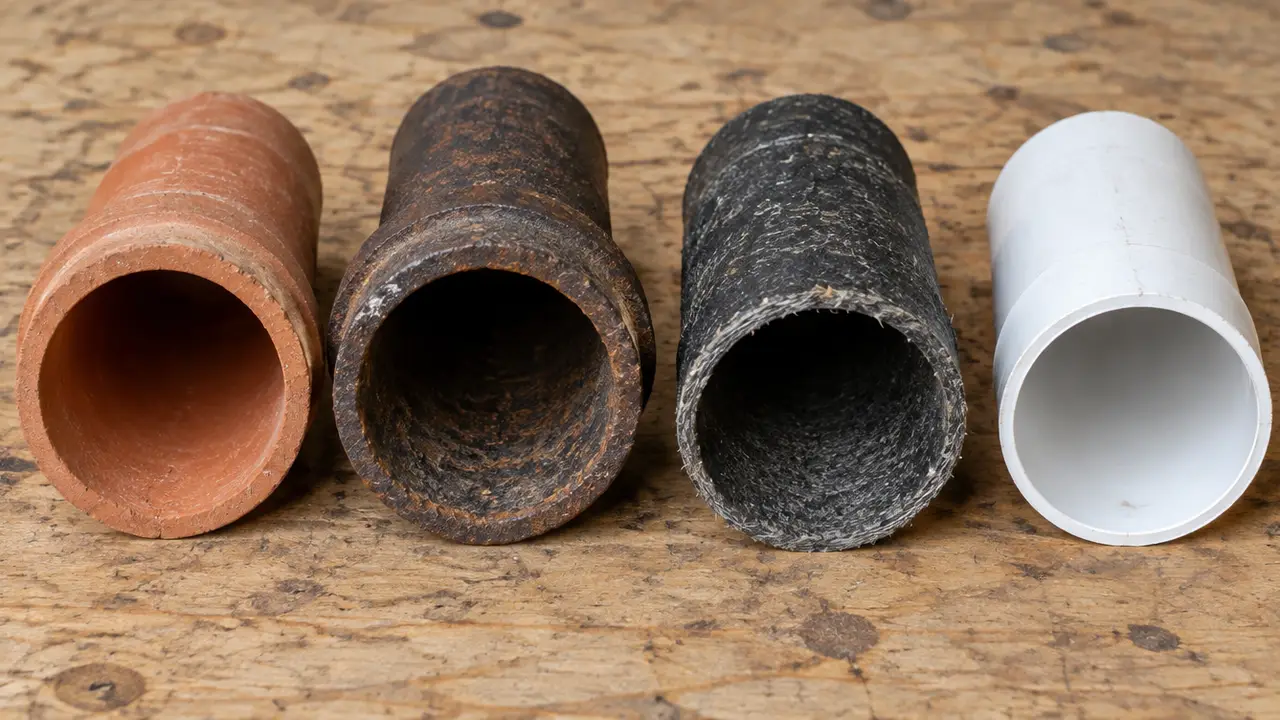
- The City's 25 Inner City communities hold 23,906 City-side service lines: 41.6% PVC, 11.7% cast iron, 3.9% relined and just 0.1% TIL.
- In many older central communities, more than half of City-side records sit under codes other than TIL, cast iron, PVC or CIPP, largely pre-1950 records under the unexplained OTHER code.
- High PVC shares and recent median years in places such as Altadore and Mount Pleasant are consistent with services renewed during redevelopment.
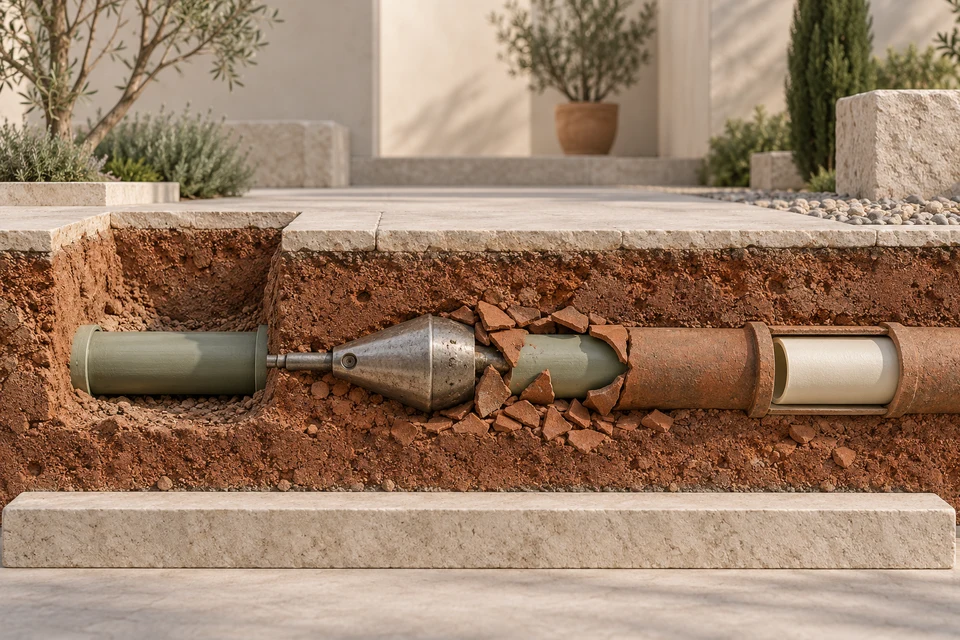
- Mature boulevard trees, lanes, narrow lots and infill next door are the inner-city cost drivers; lining often avoids the worst of them.
- For an inner-city character home, a scope is essential because the data rarely tells you what the old pipe is.
01 /What makes inner-city Calgary sewer lines different?
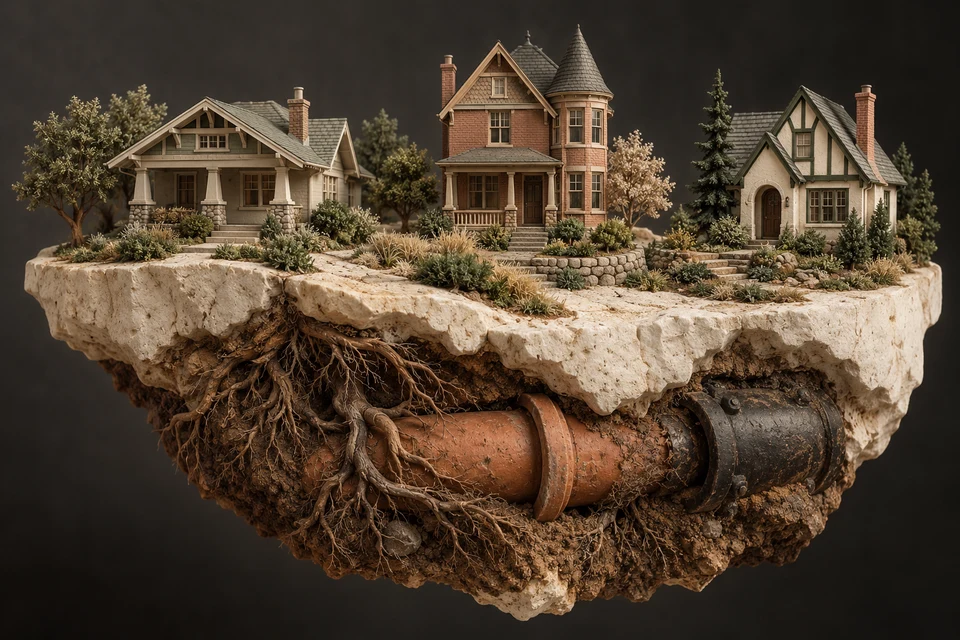
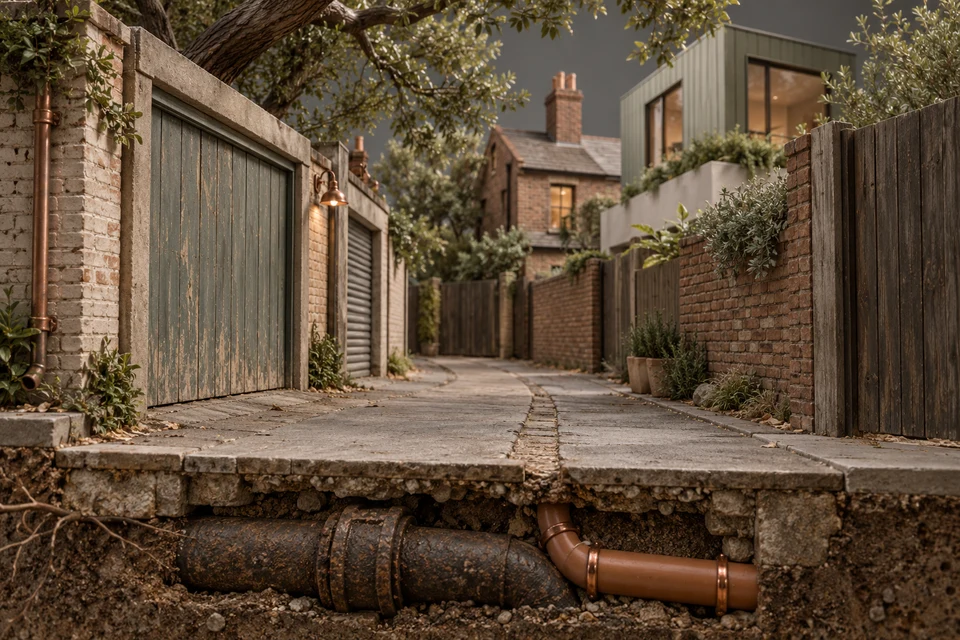
Inner-city sewer lines are different in three ways: they are older, they are more mixed, and they are harder to read from records. The central communities were serviced first, many before 1950, and have since been reworked lot by lot as houses were renovated, demolished and replaced. A single inner-city block can hold a 1912 service, a 1958 cast iron replacement, a 2019 infill connection and a City-side liner.
The City of Calgary groups communities into structure classes. Its Inner City class covers 25 communities and 23,906 City-side service lines; its Centre City class covers 3 communities and 605 lines. HAUSE joined the City's service line records to those classes.
| Class | Service lines | % TIL | % cast iron | % PVC | % relined | % other codes |
|---|---|---|---|---|---|---|
| Inner City | 23,906 | 0.1 | 11.7 | 41.6 | 3.9 | 42.7 |
| Centre City | 605 | 0.5 | 26.0 | 14.5 | 0.5 | 58.5 |
| 1950s | 46,833 | 23.1 | 18.5 | 22.7 | 3.8 | 31.9 |
| Citywide | 367,397 | 20.2 | 3.3 | 66.5 | 1.1 | 8.9 |
02 /What do the records show for older central communities?
In the older central communities, the headline is how much of the record is under codes that do not name a material. Clay tile is almost absent, cast iron is common, and PVC reflects decades of renewal.
| Community | Lines | Median year | % cast iron | % PVC | % relined | % other codes |
|---|---|---|---|---|---|---|
| Rosedale | 592 | 1950 | 2.2 | 30.1 | 9.3 | 58.4 |
| Scarboro | 335 | 1952 | 4.8 | 22.1 | 0.6 | 72.2 |
| Inglewood | 1,037 | 1954 | 9.2 | 30.3 | 0.3 | 60.2 |
| Ramsay | 882 | 1954 | 12.2 | 27.0 | 1.7 | 58.9 |
| Upper Mount Royal | 832 | 1954 | 8.3 | 29.8 | 2.6 | 59.1 |
| Renfrew | 1,870 | 1955 | 13.6 | 32.5 | 1.5 | 52.3 |
| Elbow Park | 1,224 | 1957 | 6.7 | 37.6 | 1.2 | 54.4 |
| Bankview | 768 | 1957 | 17.3 | 24.3 | 3.8 | 54.6 |
| Sunnyside | 658 | 1959 | 12.8 | 26.1 | 4.3 | 56.8 |
| Bridgeland/Riverside | 1,102 | 1960 | 12.3 | 31.7 | 2.1 | 53.7 |
| Sunalta | 373 | 1960 | 22.8 | 15.5 | 4.3 | 57.1 |
| Beltline | 473 | 1962 | 27.5 | 13.5 | 0.4 | 58.4 |
| Crescent Heights | 1,395 | 1965 | 9.0 | 24.4 | 16.0 | 50.6 |
Two groups stand out. Communities such as Scarboro, Inglewood and Rosedale have most of their records under other codes, so the data confirms the lines are old without saying what they are. Communities such as Crescent Heights (16% relined) and Rosedale (9.3%) show that City-side relining has already reached parts of the inner city, which tells you nothing about the private side of the same houses.
03 /What does redevelopment look like in the data?
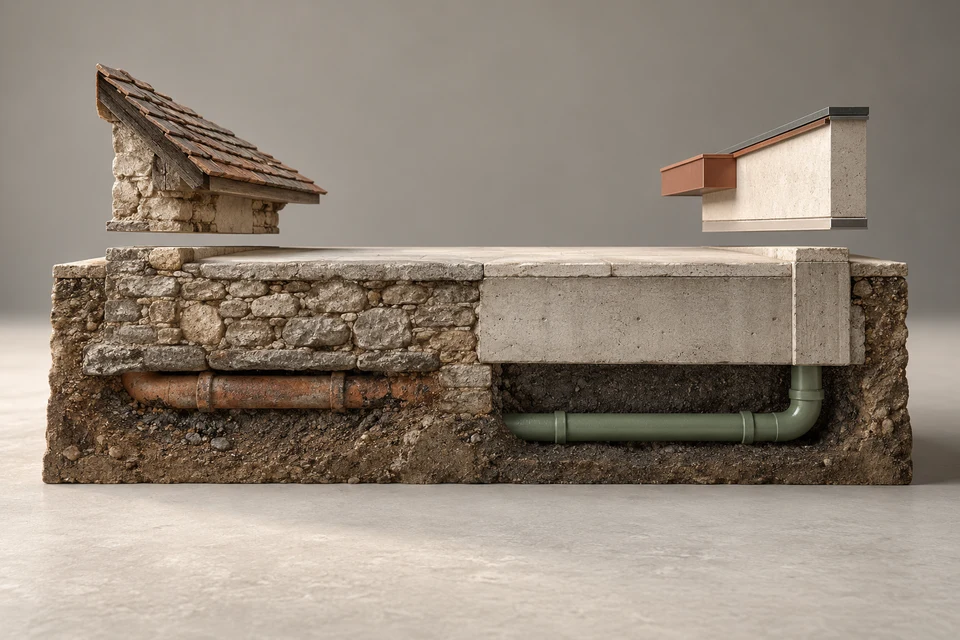
Several established central communities now have median City-side install years in the 1990s or 2000s: Altadore (2007, 68.7% PVC), Parkdale (2005), Mount Pleasant (2004, with 11.2% relined), Richmond (1999), West Hillhurst (1998), Killarney/Glengarry (1996) and Hillhurst (1990). Those medians are far later than the original build-out and are consistent with services being renewed as lots were redeveloped, though the City's data does not record why a line was replaced.
For a buyer, that means an inner-city street is a patchwork. The infill next door may have a new PVC service to the main while the bungalow you are looking at still has its original line. The address lookup in the Home Buyer Sewer Risk Check reads the City-side record for a specific address, and infill and redevelopment sewer service covers the builder's side.
04 /Why do inner-city sewer repairs cost what they do?
Inner-city repairs are shaped less by the pipe than by what surrounds it. Four features come up again and again.
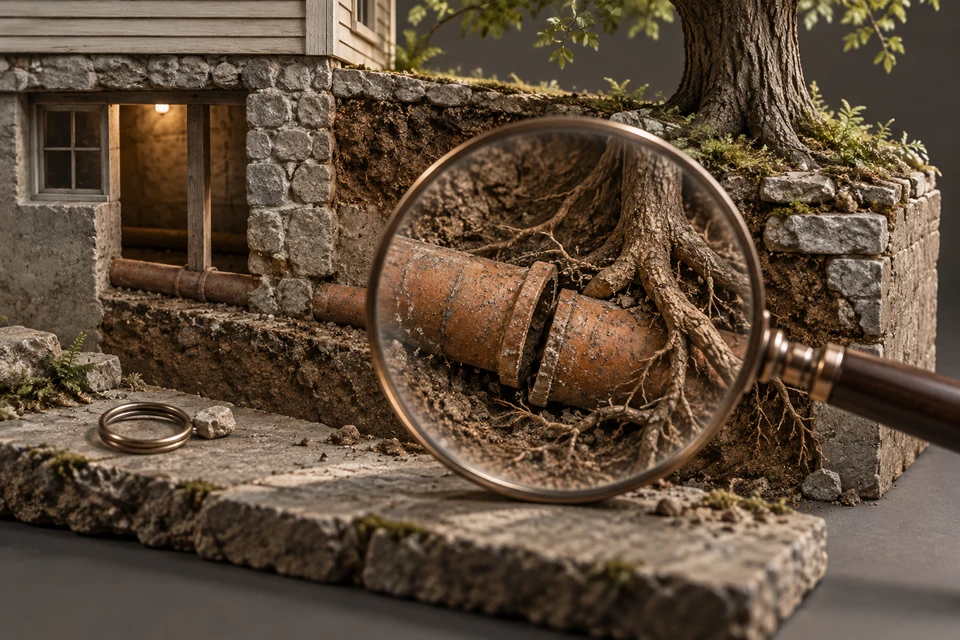
- Mature boulevard and yard trees. Large elms, poplars and maples line many central streets. Their roots are drawn to old joints, and digging near them may need tree protection; City trees near a dig are a question for the City before work starts.
- Lanes and narrow lots. Some services run to the street and some toward the lane. Narrow lots leave little room for an excavator, a spoil pile and a trench box side by side, which slows open-cut work.
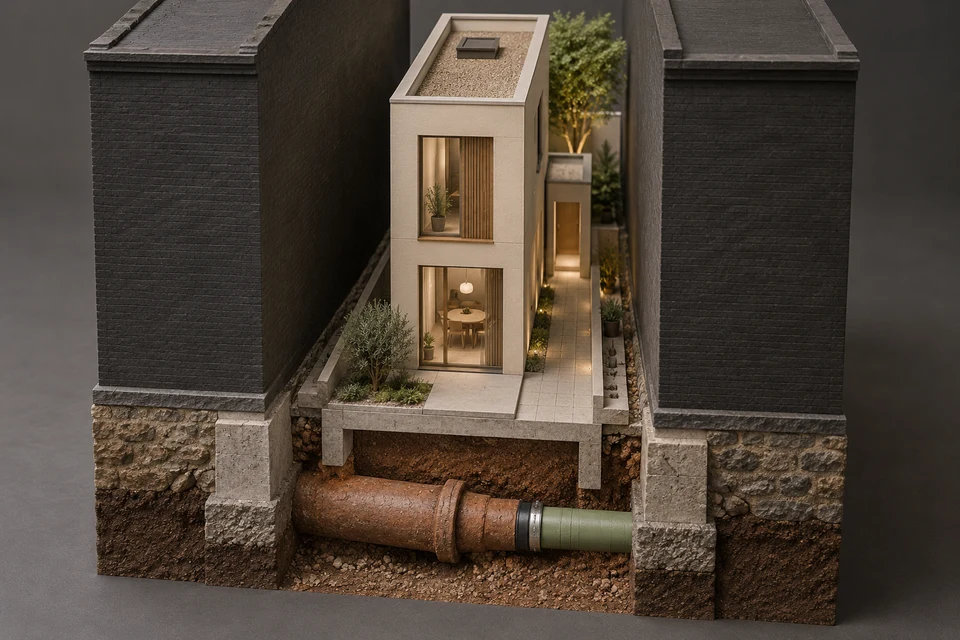
- Infill neighbours. A new house next door can mean a deep foundation close to your trench line, making excavation more careful and sometimes more expensive.
- Older, varied connections. Old services can have unusual materials, transitions and connections at the City end, which raises the chance of City-side work.
Those features push inner-city owners toward lining more often, because it leaves trees, landscaping and tight side yards alone. As 2026 Calgary planning estimates, a 12 m lateral under front landscaping plans at $8,800 to $22,800 to line, versus about $13,100 to $28,600 by open cut at typical depth and about $16,250 to $35,250 if the line is deep. City-side connection work adds $3,000 to $15,000 to any method.
05 /Buying an inner-city character home: what to check
Character homes are where sewer uncertainty is greatest. The house may be a century old with a service replaced once, twice or never, and the City record may say only OTHER. Treat the sewer as unknown until a camera has been through it.
- Read the City-side record
Use the lookup in the risk check. A recent PVC or CIPP record is good news for the City's portion only.
- Score the house
A pre-1980 build year with an unknown or OTHER material, mature trees and a finished basement lands in the High band before any scope.
- Scope before firm
Ask the operator to identify the material at each section and to try to reach the City connection. See sewer scope before buying in Calgary.
- Look inside too
Older homes often have cast iron stacks and building drains inside, which can scale and crack; ask the scope operator to note what the camera sees before it leaves the house.
- Price and negotiate
Get a written quote for anything found and discuss options with your REALTOR® and lawyer; see negotiating sewer repairs when buying.
06 /Who to call about an inner-city sewer line
Start with the boundary. The City of Calgary's dataset description says the pipe from the sanitary main to the property line is owned and maintained by the City, and the pipe from the property line to the house by the homeowner. If a problem may be on the City side, or the street or neighbours are affected, call 311. The City's customer guide describes crews running a steel snake to the main to decide whether a blockage is private or public, and leaving a Customer Service Report.
- 311 for City-side problems, backups affecting the street, records corrections and questions about work near City trees or in the boulevard.
- A drain contractor with a camera for private-side clearing, scoping and locates.
- Your insurer or broker for backup damage; see does insurance cover sewer line replacement.
- Your REALTOR® and lawyer when a sewer issue affects a purchase or sale.
For planning ranges on any method, use the Calgary Replacement Cost Estimator or read sewer line replacement cost in Calgary. For the civic side of how Calgary's system works, CalgarySewers.ca maps the City's data. When you want written prices or a scope, send a request.
FAQQuestions people ask
Do inner-city Calgary homes have clay sewer pipes?
Rarely on the City side: communities the City classes as Inner City are just 0.1% TIL. Cast iron (11.7%), PVC (41.6%) and older unexplained codes are far more common. The private side can differ.
Why is so much inner-city data coded OTHER?
Most pre-1950 City records use the OTHER code, which the City's metadata does not define. It tells you a line is old, not what it is made of.
Is sewer replacement more expensive in the inner city?
Often somewhat, because of mature trees, tight lots, lanes, infill neighbours and a higher chance of City-side work. Lining frequently avoids the worst of those costs.
My inner-city house shows a new City-side record. Is my line new?
Not necessarily. The City record covers only the main-to-property-line portion. Your private side may still be original.
Who do I call about a sewer problem in an inner-city lane or boulevard?
Call 311. Problems on City property, in the boulevard or in the lane main are the City's to assess.
Should I scope an inner-city infill before buying?
Yes. New services can still have construction debris, poorly seated joints or sags where backfill settled.