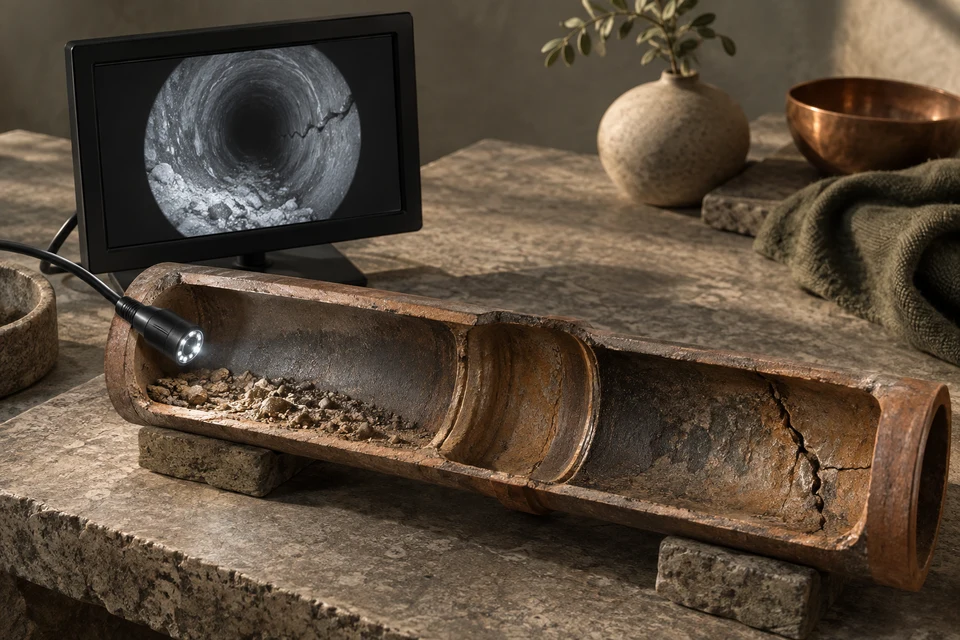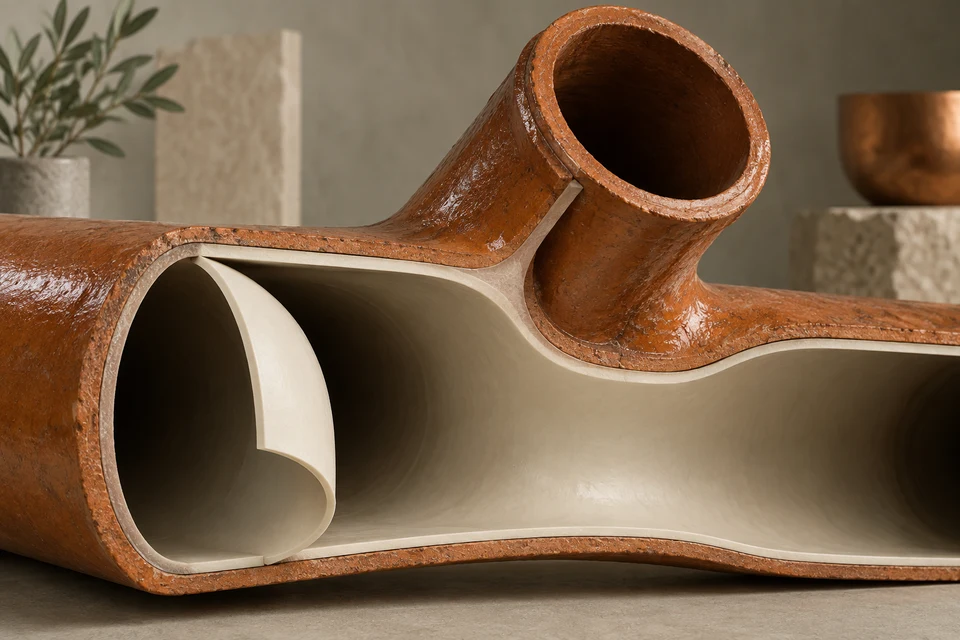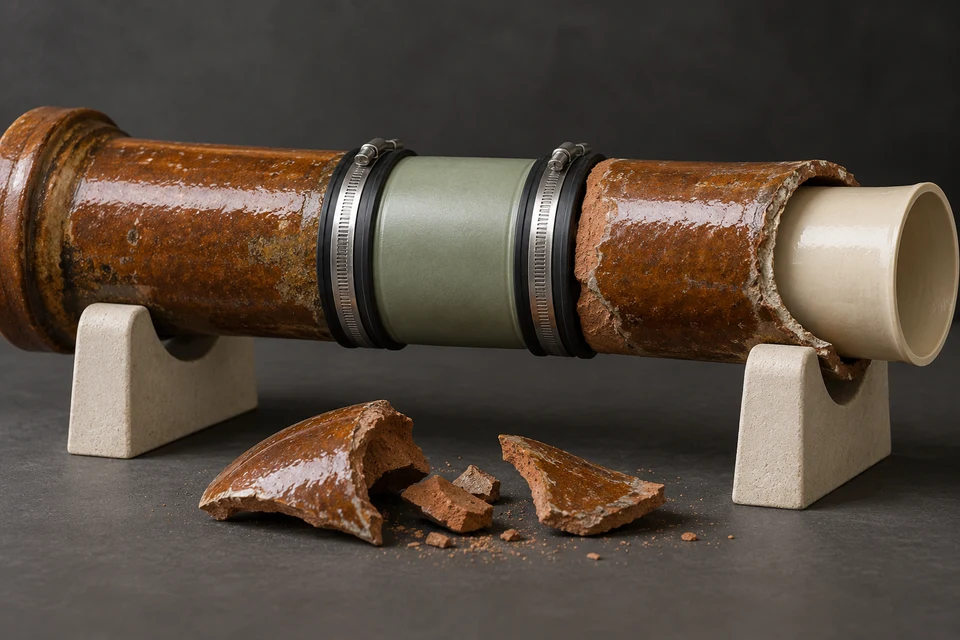
Clay sewer pipe can usually be repaired, patched or relined as long as it is still round and on grade. In Calgary, a single dig or sectional patch plans at $4,500 to $12,000, lining a typical 15 to 18 m clay lateral at about $10,000 to $30,000, and open-cut replacement at $14,000 to $40,000, as 2026 estimates. Sags and collapses need replacement.
- A cracked clay joint can be patched from inside with a sectional liner or dug up and replaced, if the rest of the line is sound.
- Clay laterals are among the best candidates for lining because the pipe wall does not corrode; roots must be cut out first.
- Lining cannot fix a sag and cannot pass a collapse; those sections need excavation or bursting.
- Brittle clay bursts cleanly, so pipe bursting is often an option for clay where the route is fairly straight.
- Cutting and joining clay is contractor work: it needs the right cutter, silica dust control and couplings sized to clay's outside diameter.
01 /Can clay sewer pipe be repaired?
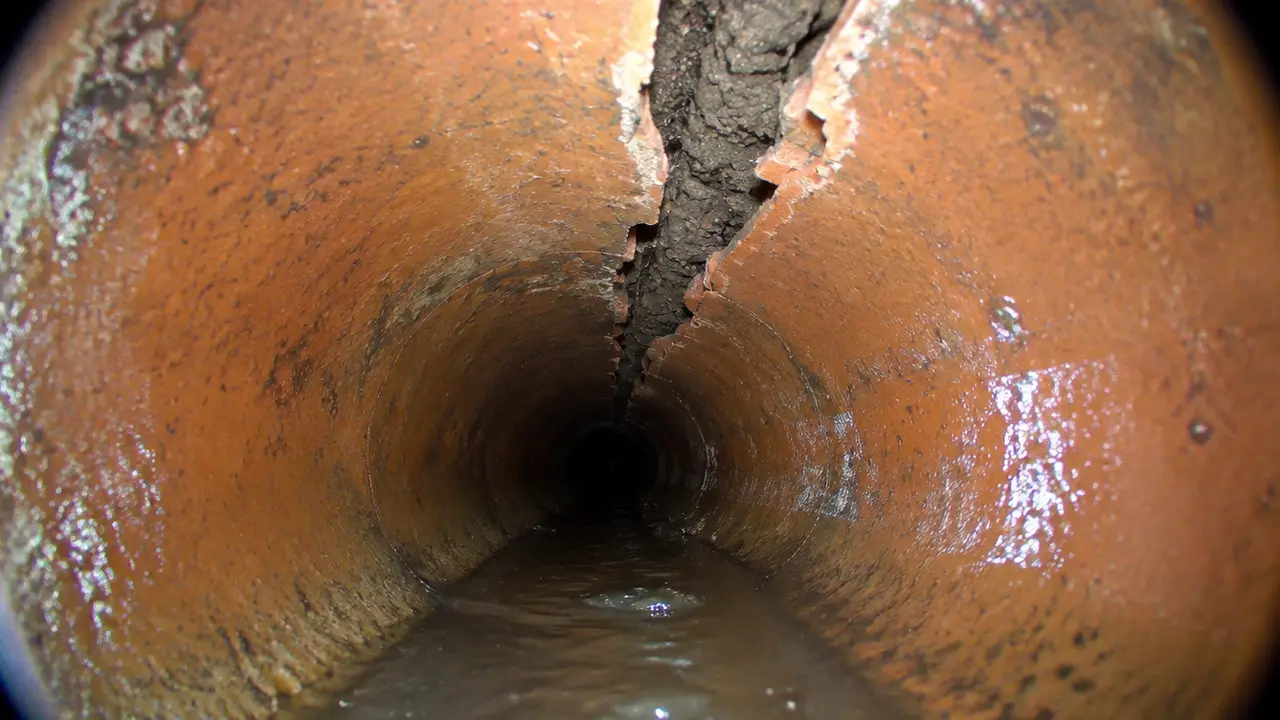
Yes. Clay sewer pipe can be repaired in four main ways: cutting roots and maintaining it, patching one defect, lining the whole run, or replacing it by digging or bursting. Which one fits depends on how many defects there are, where they are, and whether the pipe is still round and on grade. A recorded camera inspection with distances answers those questions; price nothing before it.
| Option | What it does | When it fits | When it does not |
|---|---|---|---|
| Maintenance | Cuts roots and clears deposits; the pipe stays as it is | Light roots at a few joints, no structural damage | Recurring backups, cracks or offsets |
| Spot repair (dig) | Excavates one location and replaces a section with PVC | One defect, reachable spot, the rest of the line sound | Defects spread along the run |
| Sectional liner (patch) | Cures a short liner inside the pipe at one defect | One crack or leaking joint, pipe round | Collapse, heavy offset, sag |
| Full lining (CIPP) | Cures a new pipe inside the old one from end to end | Roots and cracks along the run, pipe still round | Sag, collapse, severe offsets, undersized pipe |
| Bursting | Breaks the clay outward and pulls new pipe in behind | Fairly straight run, pits possible at both ends | Sags (it follows the old path), multiple bends |
| Open-cut replacement | Digs up and replaces the line | Any condition, especially sags and collapse | Only limited by cost and disruption |
02 /Can a cracked clay sewer pipe be patched?
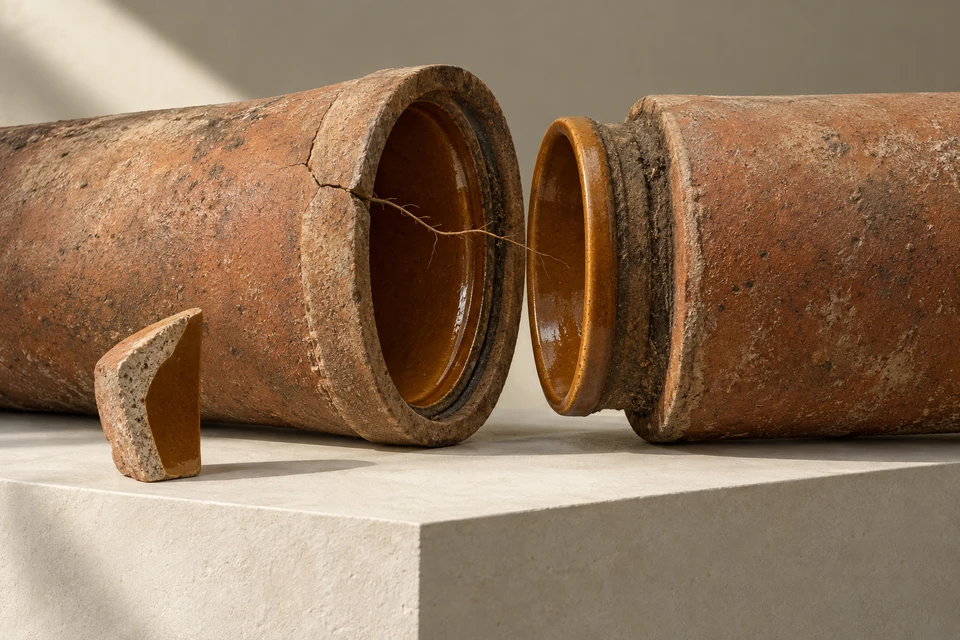
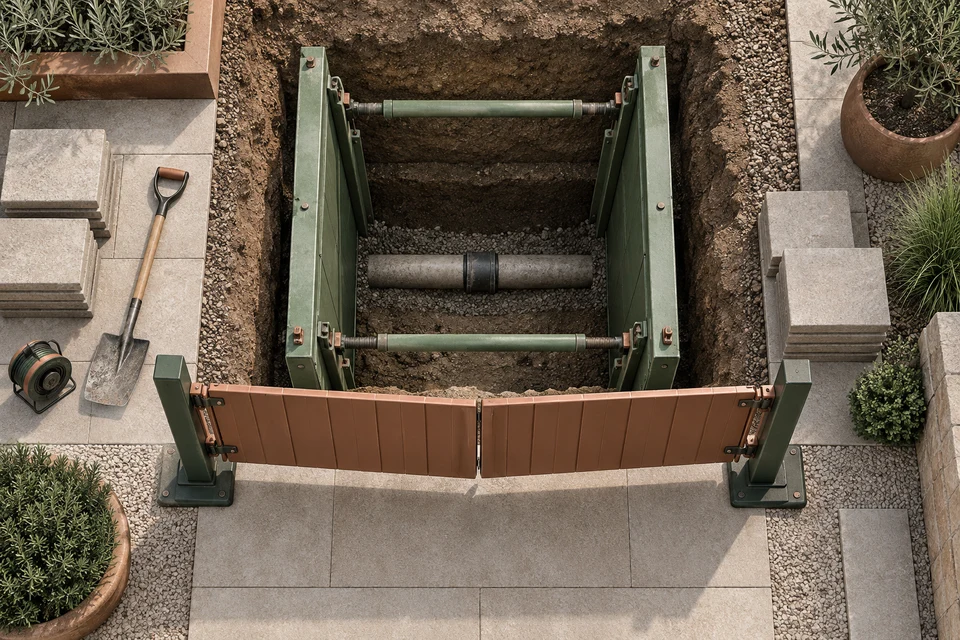
A cracked clay sewer pipe can be patched when the crack is localized, the pipe around it is still round, and the line holds its grade. There are two ways to do it. A contractor can dig down to the defect, cut out the damaged section and splice in PVC with shielded couplings. Or a crew can pull a short sectional liner to the defect on a packer and cure it in place, sealing the crack from inside without digging.
Both count as spot repairs, and in Calgary the planning range is $4,500 to $12,000 flat, adjusted for depth and surface in the Calgary Replacement Cost Estimator. A deep spot dig under a driveway can plan at $7,625 to $21,000; a shallow dig under lawn at $4,050 to $10,800.
The money trap with patching is sequence. A 1970s clay lateral with one bad joint usually has fifteen or more other joints of the same age. If the footage shows roots starting at several of them, two or three spot repairs over a few years can cost as much as lining the whole run once. Ask the contractor to describe every joint on the video, not just the worst one.
03 /Can clay sewer pipes be lined or relined?
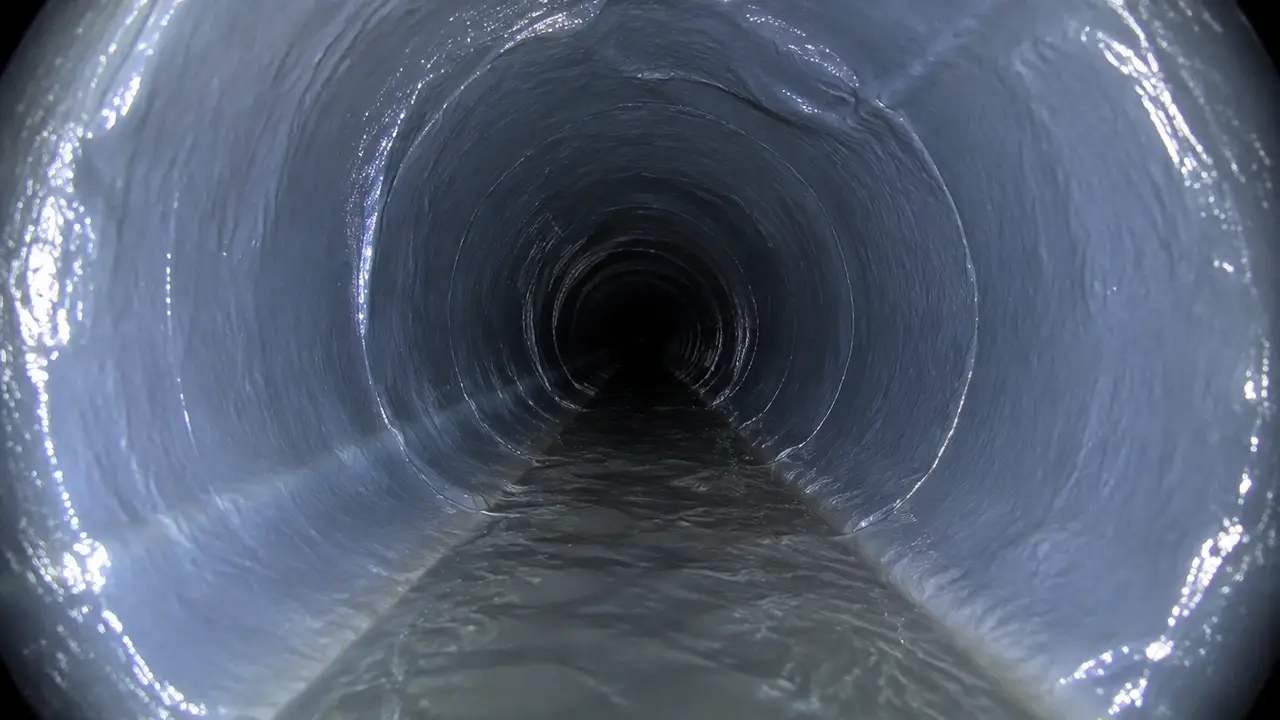
Yes, and clay is one of the most common materials to line. Cured-in-place pipe (CIPP) lining forms a new jointless pipe inside the clay. Because the clay does not corrode, the host pipe usually keeps its shape well, and the liner seals every joint roots were using. Across Calgary, 4,113 City-side service lines are already recorded as CIPP, and in communities such as University Heights and Glendale about one in five City-side lines has been relined.
- Clean and cut roots
Roots must be cut flush and the pipe cleaned, or the liner will cure around them.
- Confirm the pipe is round and on grade
Lining follows the host pipe. A sag stays a sag, and a collapsed section blocks the liner.
- Measure and set access
The crew works from a cleanout or creates a small access point; the length and bends set the liner size and method.
- Install and cure
The liner is inverted or pulled in and cured with hot water, steam or light, depending on the system.
- Reinstate and record
Any connections are cut open from inside, and an after-video documents the finished liner.
As 2026 Calgary planning estimates, lining a 12 m clay lateral plans at $8,800 to $22,800, an 18 m lateral at $11,200 to $29,700 and a 25 m lateral at $14,000 to $37,750. Depth and surface do not change those numbers, which is lining's main advantage under driveways and mature trees.
04 /What does it cost to replace clay sewer pipe in Calgary?
Replacing clay sewer pipe in Calgary costs about $14,000 to $40,000 by open cut and $10,000 to $30,000 by bursting for a typical residential lateral, as 2026 planning estimates. Length shifts the figure most, then depth and surface.
| Length | Open cut | Bursting | Lining (for comparison) |
|---|---|---|---|
| 12 m | $12,600–$26,600 | $9,800–$23,200 | $8,800–$22,800 |
| 18 m | $15,900–$34,400 | $12,200–$29,800 | $11,200–$29,700 |
| 25 m | $19,750–$43,500 | $15,000–$37,500 | $14,000–$37,750 |
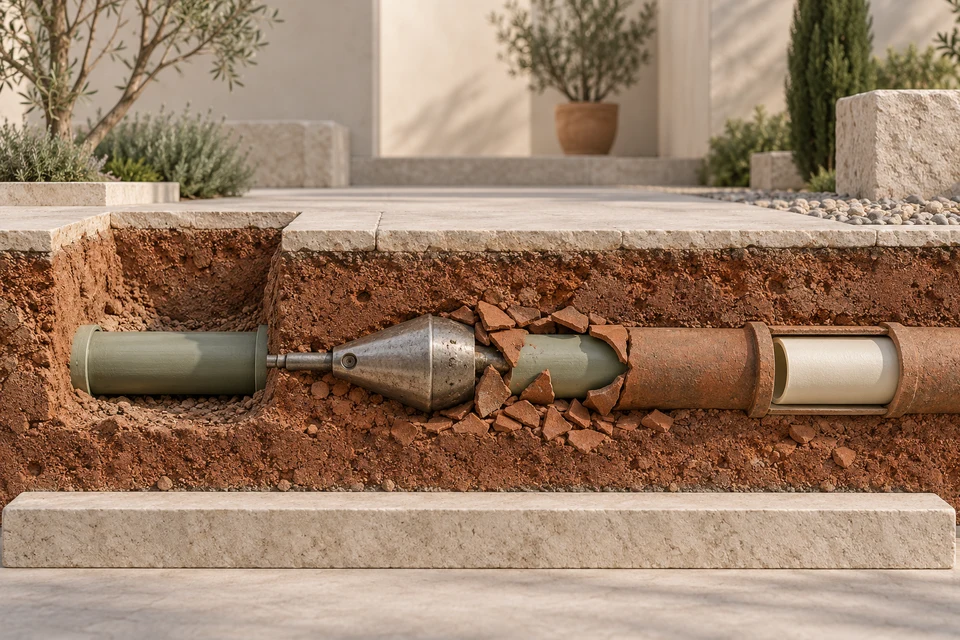
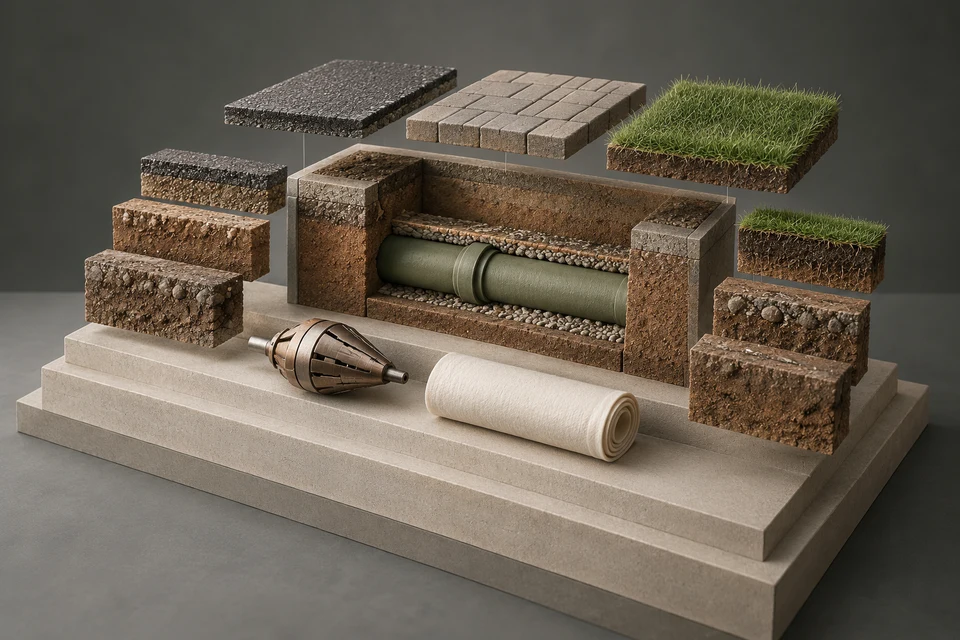
Bursting deserves a closer look for clay. Brittle clay fractures cleanly ahead of a bursting head, which is exactly what bursting needs, and the new pipe pulled in behind is usually high-density polyethylene. The limits are geometry and surroundings: bursting follows the old path, so it cannot correct a sag, it struggles with multiple bends, it needs pits at both ends, and near-surface bursting can heave the ground or disturb nearby utilities.
Add a deep lateral (× 1.25 for open cut and bursting), a driveway or concrete (+ $2,000 to $6,000), City-side connection work (+ $3,000 to $15,000) or a winter dig (× 1.10 to 1.25) and the totals rise from there.
05 /Why is cutting, capping and joining clay pipe a contractor job?
People search for how to cut clay sewer pipe by hand or with a reciprocating saw because they want to save the cost of a spot repair. The cutting is the easy part. The expensive failures come from what happens around it: a shattered bell, a joint that is not supported, a coupling that does not fit clay's thicker wall, or a repair left off grade.
- Cutting. Contractors usually cut clay with a chain-type snap cutter, which cracks the pipe cleanly around its circumference, or a diamond blade with water or dust extraction. A reciprocating saw with an abrasive blade is slow and more likely to crack the pipe beyond the cut.
- Dust. Cutting clay releases fine dust that can contain crystalline silica. Use wet cutting or extraction and proper respiratory protection, or leave it to a crew equipped for it.
- Joining. Clay's outside diameter is larger than PVC of the same bore, so repairs use shielded flexible couplings or transition couplings made for clay to plastic. An unshielded rubber sleeve can sag and misalign the joint over time.
- Capping. An abandoned clay stub is normally sealed with a proper cap or plug fitting. Where a service is disconnected for demolition or infill, the City sets requirements for how and where; confirm through 311.
- Locating. To find a buried clay line, a camera with a sonde is pushed into the pipe and a locator above ground reads its position and depth. Public locate services do not mark your private sewer lateral.
If you are an owner-occupier considering the work yourself, read can I replace my own sewer line for what the City's homeowner permit allows and what it does not.
06 /Repair or replace: how do the numbers compare over time?
The fairest way to decide is to compare total cost over the years you expect to own the house, not the size of the next invoice. Root cutting a clay lateral every year or two at about $450 to $1,100 a visit costs $2,250 to $11,000 over ten years, depending on whether the visits are yearly or every second year, before any backup, cleanup or insurance claim. A lining job at $10,000 to $26,250 for 15 m ends that cycle. For choosing the season and pairing the job with other projects, see the best time to replace a sewer line in Calgary.
| Approach | Spending pattern | Ten-year planning total |
|---|---|---|
| Maintain | Jetting every one to two years | $2,250–$11,000, plus any backup costs |
| Patch as needed | Two or three spot repairs over the decade | $9,000–$36,000 |
| Line once | One lining job, then occasional checks | $10,000–$26,250 |
| Replace once | One open-cut job at typical depth under lawn | $14,250–$30,500 |
If you are staying ten or more years and the footage shows defects along the run, a one-time fix usually wins. If you are selling within a couple of years, maintaining and documenting the line may be reasonable, as long as you are open with buyers; see selling a house with an old sewer line. For the complete Calgary price picture, see sewer line replacement cost in Calgary, and when you are ready, request quotes.
FAQQuestions people ask
Can clay sewer pipes be relined?
Yes, if the pipe is still round, on grade and not collapsed. Roots are cut out first, then a cured-in-place liner forms a new jointless pipe inside the clay.
How much does a clay sewer pipe liner cost in Calgary?
As 2026 planning estimates, lining a clay lateral plans at about $8,800 to $22,800 for 12 m and $11,200 to $29,700 for 18 m, before GST. Depth and surface do not change the lining range.
Can you replace just part of a clay sewer pipe?
Yes. A spot repair replaces one section, usually with PVC joined by shielded couplings. It makes sense when the rest of the line is sound.
Can you cut clay sewer pipe with a Sawzall?
It can be done with an abrasive blade, but it is slow and more likely to crack the pipe. Contractors usually use a snap cutter or a diamond blade with dust control, because cutting clay releases silica dust.
Is it worth repairing clay pipe instead of replacing it?
Often, if the defects are few and the pipe is round. If defects are spread along the run and you plan to stay, lining or replacement usually costs less over ten years than repeated repairs.
Does bursting work on clay pipe?
Usually well, because brittle clay fractures cleanly. It cannot fix a sag and struggles with several bends, and it needs a pit at each end.
NETWORKGo deeper across the HAUSE Sewer network
Permanent fixes for roots in sewer lines
Permanent fixes for roots in sewer lines: CIPP lining, sectional point repairs, pipe bursting and open-cut replacement compared by cost, lifespan and fit.
SewerJetting.caHydro jetting tree roots: what it clears, and why the roots come back
Hydro jetting tree roots in a sewer line: root nozzles vs cable cutters, why roots regrow at the same joints, clay pipe care, and when to line instead.
SewerQuotes.comSewer pipe lining cost: what a CIPP liner should cost in Canada
Sewer pipe lining cost in Canada (2026): CIPP liner ranges in CAD for full laterals and single sections, the line items, cost drivers and quality checks.