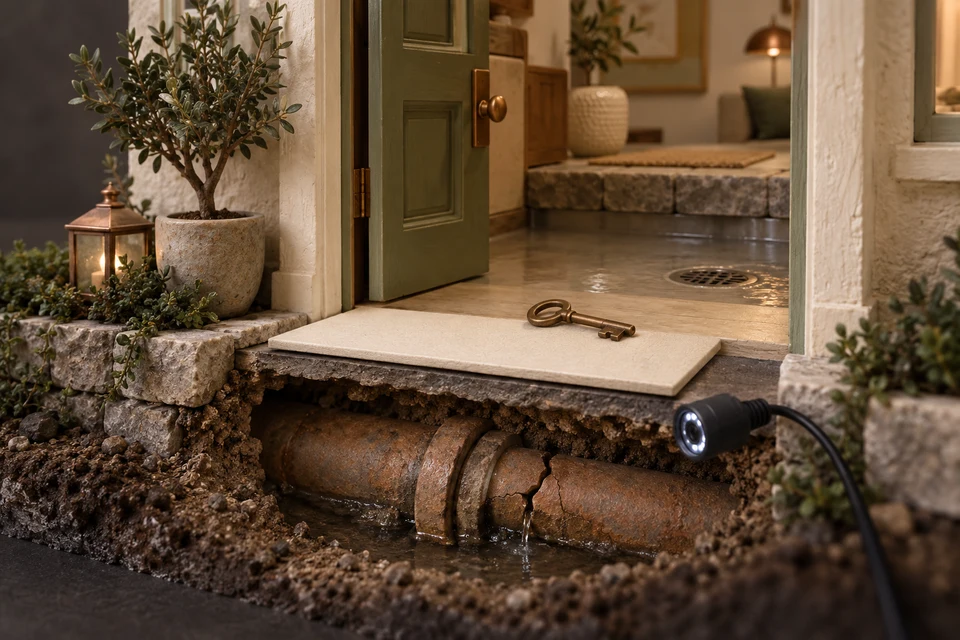
If you bought a Calgary house and the sewer line turns out to be bad, deal with safety and any backup first, then establish whose pipe the problem is on: call 311 if it may be the City's. Get a camera inspection with distances, price the fix, check your insurance, and talk to a real estate lawyer promptly if you believe the seller knew and did not disclose.
- A backup comes first: stop using water, keep people away from sewage and electrical equipment, and call 311 if the street or neighbours are affected.
- The City's published split makes the main-to-property-line pipe the City's and the property-line-to-house pipe the owner's; 311 can send a crew to check.
- Whether you have any claim against a seller is a legal question that turns on facts and time limits; see a lawyer early and keep evidence.
- Insurance usually treats backup damage and the cost of fixing the pipe differently; read the wording of your policy.
- A staged plan — clear, maintain, then fix in the dig season — can bridge a winter purchase to a planned repair.
01 /What should I do first if the sewer line fails after I move in?
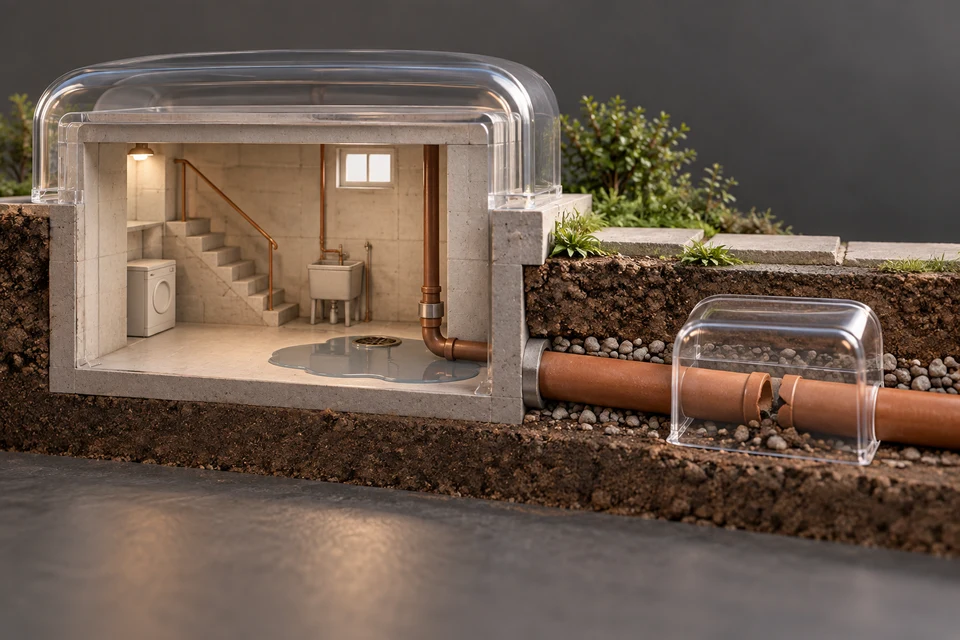
Deal with the immediate problem before the paperwork. If sewage is coming up through a floor drain or toilet, stop all water use in the house — no flushing, laundry, dishwasher or showers — keep children and pets away, and do not touch electrical equipment or cords near the water. If water is near the furnace, the panel or outlets, stay out and have the power cut by the utility or an electrician.
Then take photos and video before anything is cleaned, note the time and which drains overflowed, and call your insurer or broker to open a claim if there is damage. Those records will matter later, whatever the cause.
02 /Is it the City's problem or mine?
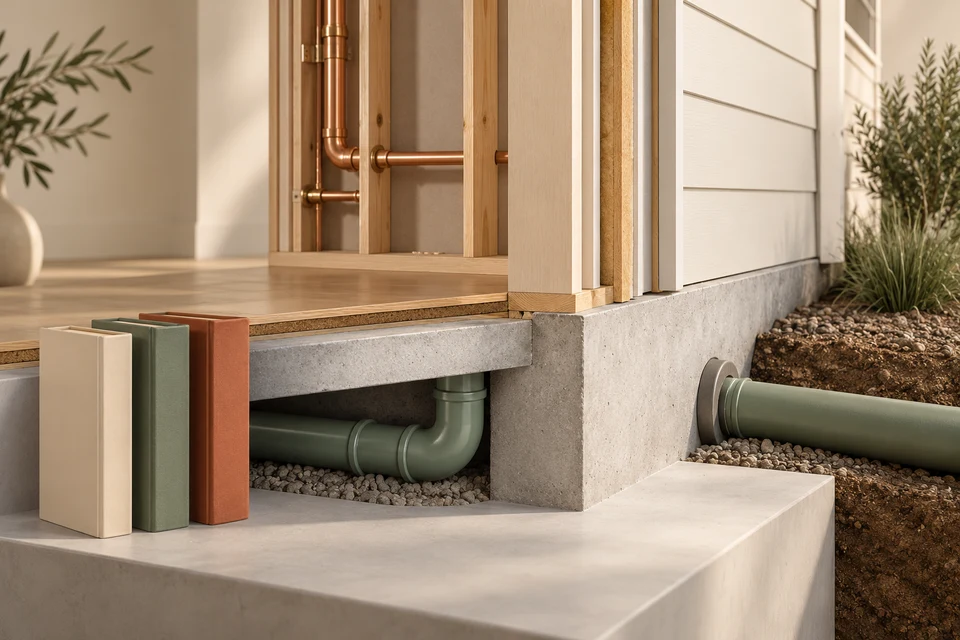
Start by finding out whose pipe the problem is in. The City of Calgary's service line dataset describes the split: the pipe from the sanitary main to the property line is owned and maintained by the City, and the pipe from the property line to the house is owned and maintained by the homeowner.
The City's own customer guide for sewage backups describes what happens when you call 311. A Water Services crew feeds a steel snake from your cleanout out to the main to find out whether the blockage is on your property or the City's. When the answer is your side, the City tells you to call a plumber, even if the crew's test happened to open the line. Either way you are left a copy of a Customer Service Report. Before the crew arrives, the City asks that you find the cleanout and clear space around it.
| What you see | First call | Why |
|---|---|---|
| Sewage in the street, a manhole overflowing, or neighbours backing up too | 311 | Points to the City main |
| A sinkhole or wet spot in the boulevard or road | 311 | Likely on City property |
| Backup in your basement only, neighbours fine | 311 or a drain contractor | 311 can check which side; a contractor can clear and camera |
| Slow drains, gurgling, recurring clogs, no backup yet | A drain contractor with a camera | Likely private; you need footage to decide |
Once the line is flowing, book a camera inspection with distances and a locate. That footage decides the repair, the cost, any insurance question and any conversation with the seller. CalgarySewers.com covers the homeowner help-desk side of backups in more detail.
03 /What does the camera usually find in a problem line?
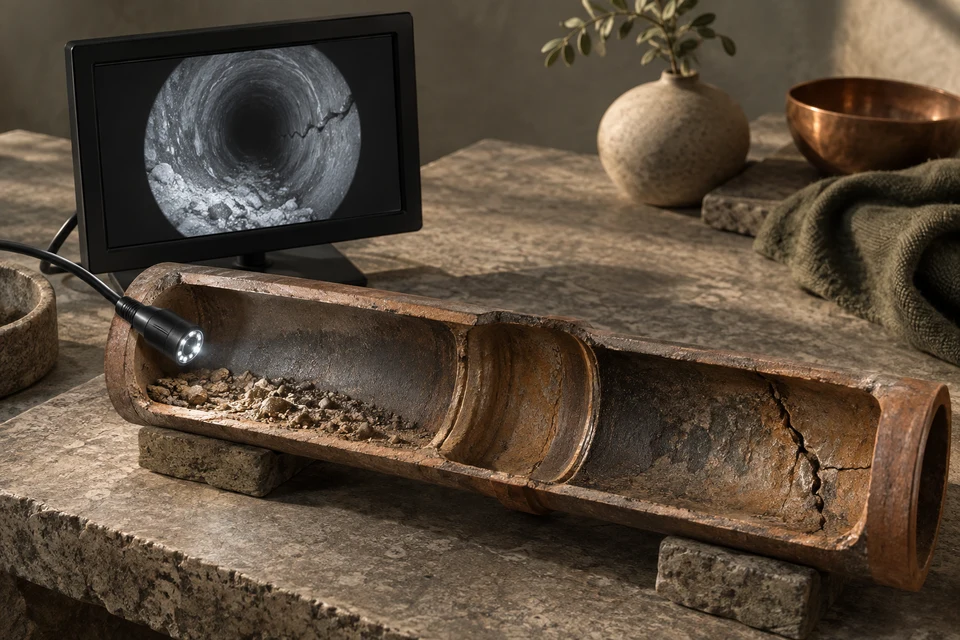
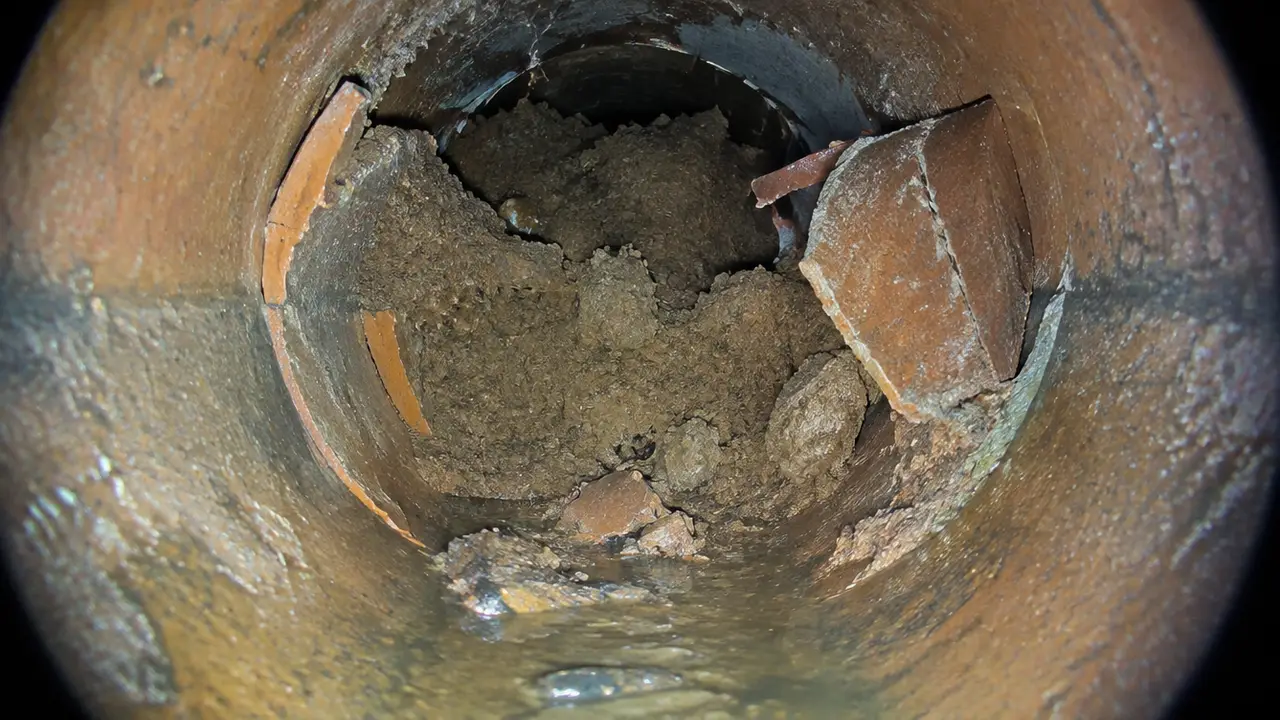
In older Calgary houses the usual findings are roots at joints in clay tile, cracked or offset joints, scale in cast iron, and sags where the line has settled. Sags are a common hidden problem after a purchase because a line with a belly can drain well enough at showings and then clog repeatedly once a family is running laundry, dishwashers and showers every day.
Match what the camera shows to the remedies in reading a sewer scope report as a buyer. The same logic applies after possession; the difference is that you are now the one paying.
04 /Can I go back to the seller?
Possibly, but it is a legal question, and the answer depends on facts you and a lawyer will need to establish. This section is general information, not legal advice.
The Real Estate Council of Alberta's consumer information describes a material latent defect as a physical issue with the property that, among other things, would be very costly to repair or makes the home dangerous or unfit, and that cannot be seen through a regular inspection. It says sellers who are aware of such a defect must inform their real estate licensee and cannot hide or misrepresent the property's condition, and that licensees must tell buyers about material latent defects they know of.
- What did the seller know? Invoices for repeated root cutting, a previous camera video, an insurance claim or 311 reports can show knowledge.
- What was said or written? Answers to questions during the purchase, and anything in the contract, matter.
- Was it discoverable? Whether a reasonable inspection would have revealed the problem is often central. A buried lateral is not visible, but a scope could have been ordered.
- How much time has passed? Legal claims have time limits. Speak to a real estate lawyer promptly rather than waiting for the repair to finish.
Do not delay necessary repairs to preserve evidence without advice. Instead, record everything before the work starts: the full camera video, photos, the contractor's written findings and any removed pipe sections, then ask your lawyer what else to keep.
05 /Will my insurance pay for a bad sewer line?
Insurance treats two different losses differently: water damage inside the house from a backup, and the cost of repairing or replacing the buried pipe. The Insurance Bureau of Canada notes that damage from sewers and drains backing up is typically not covered by a standard home policy, and that optional sewer backup coverage is offered by most insurers. Repairing the pipe itself is a separate question, covered only by some policies through a service line endorsement, and wear, age and gradual deterioration are commonly excluded.
Check what you bought when you arranged the policy for the purchase, and ask your broker in writing. If the house is only a year or two old, the new home warranty and your sewer line guide explains when the warranty provider may be the first call. The detail is in does insurance cover sewer line replacement.
06 /How should I stage the fix?
Staging lets you control cost without living with a line that backs up. Many Calgary purchases close in winter, when excavation costs more and restoration is temporary, so bridging to the dig season is common and sensible if the line can be kept flowing.
- Stabilize
Clear the line and, if roots are the cause, cut them. Budget about $200 to $450 for a cable clearing or $450 to $1,100 for jetting, as 2026 planning estimates.
- Document
Camera the line after clearing, with distances and a locate of every defect.
- Price two methods
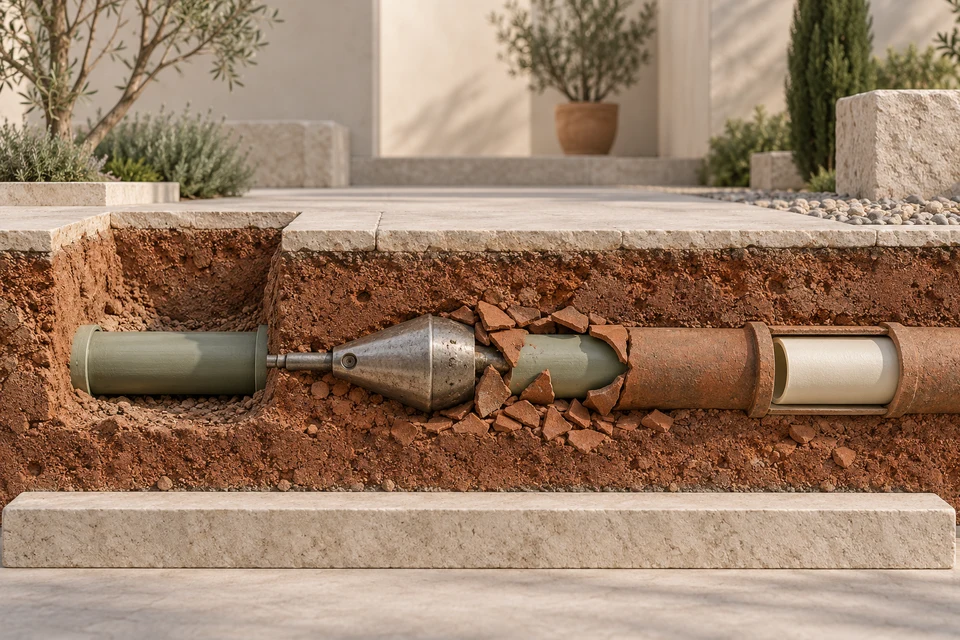
Get written quotes for lining and for digging where the footage allows both.
- Protect the basement
Hold off finishing or refinishing the basement until the line is fixed, and ask about a backwater valve.
- Schedule
Book the permanent fix for late spring through early fall if the line can wait; act immediately if it cannot.
Run your numbers through the Calgary Replacement Cost Estimator, then see financing sewer line replacement if the bill arrives before your savings do.
07 /What should I keep on file?
- The purchase contract, any amendments and anything the seller disclosed.
- Your home inspection report and any pre-purchase sewer scope.
- The City's Customer Service Report if a crew attended, and every 311 reference number.
- All camera videos, before and after.
- Quotes, invoices, permits, inspection records and warranties.
- Insurance correspondence and claim numbers.
That file serves three purposes: it supports any insurance or legal question now, it proves the line was properly fixed when you sell, and it saves the next camera operator from starting blind. When you are ready for written prices, request quotes and attach the footage.
FAQQuestions people ask
I just bought a house and the sewer backed up. Who do I call?
If sewage is in the street, a manhole is overflowing or neighbours are affected, call 311. Otherwise 311 can still check which side the blockage is on, or you can call a drain contractor to clear and camera the line.
Can I sue the seller for a bad sewer line?
That is a legal question that depends on what the seller knew, what was said, whether a reasonable inspection would have revealed it, and time limits. Talk to a real estate lawyer promptly and keep all evidence.
Does the City fix sewer lines in Calgary?
Only its own section. The City's published position puts the pipe between the main and the property line in its care, and everything on the house side in the owner's. Report possible City-side problems through 311.
Should I have caught this with my home inspection?
A standard Alberta home inspection is a non-invasive look at readily accessible parts of the home. A buried sewer lateral usually needs a separate camera scope.
Can I wait until spring to fix the line?
If it can be kept flowing with clearing and root cutting, many owners wait for the dig season. If it is broken, collapsed or backing up repeatedly, fix it now.
NETWORKGo deeper across the HAUSE Sewer network
Whose tree, whose pipe: who pays when roots block a sewer line
Who is responsible when a city or neighbour's tree sends roots into your sewer line: the general Canadian pattern, the evidence, and how to raise it.
SewerQuotes.comSewer backup insurance: what your home policy does and does not pay
Sewer backup insurance in Canada: sewer backup vs overland water endorsements, exclusions, deductibles, and why pipe repair is rarely covered.
SewerInspector.caRenting a sewer camera and scoping your own line
Can you rent a sewer inspection camera and scope your own line? What rental and consumer cameras do, how to use one safely, and where DIY falls short.
SOURCESSources and further reading
- City of Calgary — Help us help you respond to a sewage backup (customer guide)
- City of Calgary — Sewage backups
- Real Estate Council of Alberta — Property considerations (consumer information)
- Insurance Bureau of Canada — Water damage and flood protection
- HAUSE analysis of City of Calgary open data (Public Sanitary Service Lines, 2026-09-24)