Set the sewer budget from the scope result, not the listing. As 2026 Calgary planning estimates, a clean PVC line needs little beyond occasional clearing at $200 to $450, an older clay tile or cast iron line should carry a reserve toward lining at $10,000 to $30,000, and a line with a major defect should be priced as a full replacement at $14,000 to $40,000 by open cut.
- The camera result sets the budget far more than the asking price, the renovation level or the age of the kitchen.
- In the communities the City classes as 1960s/1970s, 77.5% of City-side service lines carry the TIL code, generally clay tile.
- A clean scope on a clay tile line lowers the urgency, not the likelihood that the line will need lining one day.
- Buying without a scope, or firm with no conditions, means budgeting for the top of the range for the house's era.
- Keep the sewer reserve separate from the down payment and closing costs so a backup in the first winter does not become debt.
01 /How much should a buyer set aside for the sewer line?
The amount depends on what the camera saw and what the pipe is made of. The table below turns the most common scope outcomes into a planning reserve, using the same Calgary ranges as the cost page and the Calgary Replacement Cost Estimator.
| Scope result | What to plan for | Planning amount |
|---|---|---|
| PVC, clean run to the City connection | Occasional clearing | $200–$450 per visit, as needed |
| Clay tile or cast iron, clean or only light scale | A reserve toward lining in the years ahead | Build toward $10,000–$30,000 |
| Roots at several joints, no structural defect | Jetting now, lining within a few years | $450–$1,100 per jetting, plus a lining reserve |
| One local defect: a crack, an offset joint | Spot repair | $4,500–$12,000 |
| Collapse, long belly, many broken joints | Full replacement | $14,000–$40,000 open cut, or $10,000–$30,000 trenchless |
| No scope possible | Treat as the worst plausible case for the era | Upper end of the replacement range |
The set-aside is not the same as the price adjustment you might negotiate. A reserve is money you plan to spend yourself, on your timeline. If the scope shows a defect before you go firm, the separate question of whether the seller should share the cost is covered in negotiating sewer repairs when buying.
02 /How does the era of a Calgary community change the budget?
The era sets the starting assumption before any scope happens. The City of Calgary's open data on public sanitary service lines, grouped by the City's own community structure classes, shows sharply different material mixes. These figures cover only the City-owned section from the main to the property line; the private section can differ, and large commercial and multi-family services are not included.
| Structure class | % TIL (generally clay tile) | % cast iron | % PVC | Starting budget assumption |
|---|---|---|---|---|
| 1950s | 23.1 | 18.5 | 22.7 | Mixed and older; assume replacement-level risk until footage says otherwise |
| 1960s/1970s | 77.5 | 0.3 | 17.4 | Clay tile likely; hold a lining reserve even after a clean scope |
| Inner City | 0.1 | 11.7 | 41.6 | Varied, often renewed; budget from the scope, not the era |
| 1980s/1990s | 9.1 | 0.0 | 87.6 | Mostly PVC; modest reserve unless the scope shows sags or offsets |
| 2000s | 2.1 | 0.0 | 95.7 | PVC; maintenance-level reserve, and check any remaining new home warranty |
For a house on a specific street, the Calgary clay tile and cast iron communities guide lists where each material concentrates, and the community era cost guide translates era into depth and method. For a newer home, new home warranty and your sewer line explains what coverage may still be running.
03 /What does the budget look like for a typical 1960s bungalow?
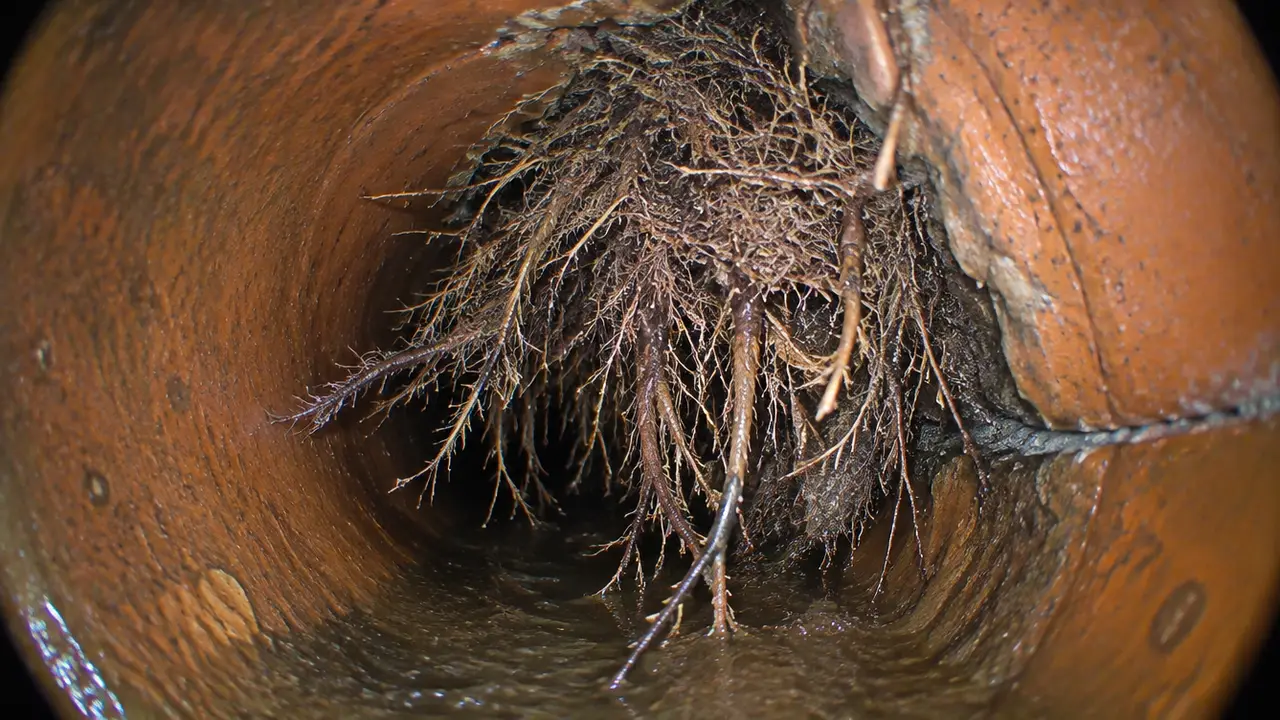
Take a 1968 bungalow in a community the City classes as 1960s/1970s, with an 18 m private lateral at typical depth under lawn. The scope shows clay tile with roots at four joints and no broken sections. That is a common Calgary result, and it produces three honest budget lines rather than one.
| Budget line | Basis | Planning amount |
|---|---|---|
| Near term | One hydro jetting after possession | $450–$1,100 |
| Reserve if lined | Lining setup plus 18 m | $11,200–$29,700 |
| Reserve if dug | Open-cut setup plus 18 m | $15,900–$34,400 |
| If the driveway sits over the line | Open cut plus concrete allowance | $17,900–$40,400 |
| If work falls in winter | Lining range × 1.10–1.25 | $12,320–$37,125 |
A buyer in this position does not need the full reserve on possession day, but should know which of those lines applies. The footage decides whether lining is possible; the site decides whether a driveway is in the way. Run your own numbers in the estimator with the length and surface from the scope.
04 /What else belongs in the sewer budget besides the pipe?
Buyers who plan only for the pipe tend to come up short, because several related costs arrive with the same job. Add these lines to the reserve if they apply to the house you are buying:
- GST. Alberta adds the 5% federal GST to contractor invoices; the planning ranges on this site are before tax.
- Finished restoration. Many quotes include rough grading and topsoil only; sod, planting beds, pavers and a finished concrete pour are often extra.
- A backwater valve. Adding one while the line is open typically plans at $1,800 to $4,500 in Calgary, more in a finished basement.
- Interior finishes. Flooring, drywall and trim disturbed by under-slab work are commonly excluded from sewer quotes.
- Temporary living costs. A basement suite or a household that cannot use its plumbing for a day or two may need to plan around the work window.
None of these is large on its own, but together they can add several thousand dollars to the headline number. Asking each contractor to list inclusions and exclusions line by line is the simplest way to see which ones your quote already covers.
05 /What if I cannot get a scope before going firm?
Then the budget has to carry the uncertainty. The Real Estate Council of Alberta explains that conditional offers let buyers carry out due diligence such as home inspections before committing, and warns that a condition-free offer removes that protection. Skipping the sewer scope means learning the line's condition after possession, when the whole cost is yours.
- Budget the upper end of the replacement range for the era, not the midpoint.
- Add the surface allowance if a driveway, deck or finished basement floor sits over the likely route.
- Book a scope soon after possession and before the first hard freeze, so any fix can happen in the warmer months.
- Keep the reserve in cash or confirmed credit rather than counting on a claim; standard home policies generally exclude wear and deterioration.
Booking and timing a scope inside a condition period is handled in depth at SewerScope.ca. This guide is about the money that follows the result.
06 /Where should the sewer money come from?
Most buyers fund a sewer reserve from one of four places, and each has trade-offs. The cleanest is cash held back from the down payment calculation, so the mortgage amount is set with the reserve already excluded. A price adjustment negotiated before going firm reduces the purchase price rather than handing you cash. Improvement financing added to a mortgage at purchase exists in some programs, and a line of credit after possession is the most common fallback.
Options and repayment arithmetic are set out in financing sewer line replacement. If the house is already yours and the line has failed, go to bought a house with a bad sewer line.
07 /How do I turn my scope result into a number today?
- Score the house
Enter material, year, trees, basement, disclosure and scope result in the Home Buyer Sewer Risk Check.
- Measure the run
Take the lateral length and any defect distances from the scope report.
- Price two methods
Run the estimator for lining and open cut with your length, depth and surface.
- Pick the reserve line
Match the scope result to the set-aside table above and note the amount.
- Get a written price if the risk is high
Where the check returns High or Very high, request quotes before the condition deadline.
FAQQuestions people ask
How much should I budget for a sewer line when buying an old house in Calgary?
It depends on the scope. As 2026 planning estimates, a clean PVC line needs only occasional clearing, a clay or cast iron line warrants a reserve toward lining at $10,000 to $30,000, and a major defect should be priced as replacement at $14,000 to $40,000 by open cut.
Does a clean sewer scope mean I don't need a sewer budget?
Not for clay tile or cast iron. A clean result means no urgent defect today; those materials still tend to need lining or replacement eventually.
Which Calgary houses need the biggest sewer reserve?
Homes in communities from the 1950s through the 1970s, where City records show clay tile and cast iron are common, especially with large trees or a lateral under a driveway.
Should the sewer reserve come out of my down payment?
That is a personal financial decision to make with your lender or adviser. Many buyers prefer to keep a separate cash cushion so an early failure does not become new debt.
What if I waive the sewer scope to win a bidding war?
Then budget for the top of the replacement range for the house's era and book a scope soon after possession, before winter.
NETWORKGo deeper across the HAUSE Sewer network
Sewer line insurance: what service line coverage costs and pays for
Sewer line insurance in Canada: how service line coverage differs from sewer backup, what it covers and costs, its limits, and when it is worth buying.
SewerInspector.caSewer scope inspections in Edmonton: what to expect and who to call
Sewer scope and sewer line inspection in Edmonton: what mature and newer neighbourhoods show on camera, cold and clay soils, elms, EPCOR and 311 checks.
SewerCleaners.caCondo and multi-family sewer cleaning programs
How condo boards build a sewer cleaning program: stack cleaning, building drains, camera baselines, reserve fund planning, bylaws and resident notices.