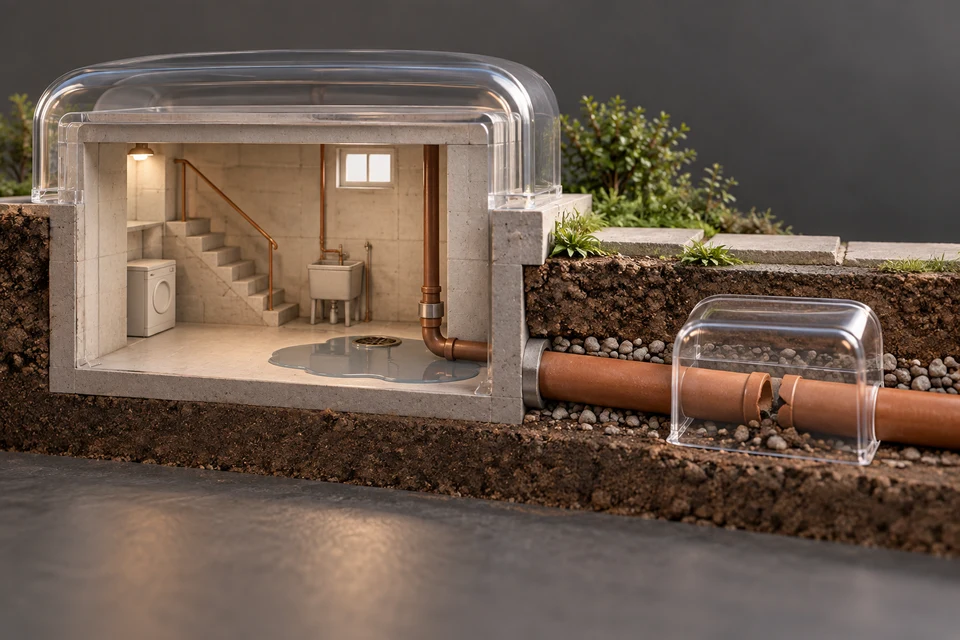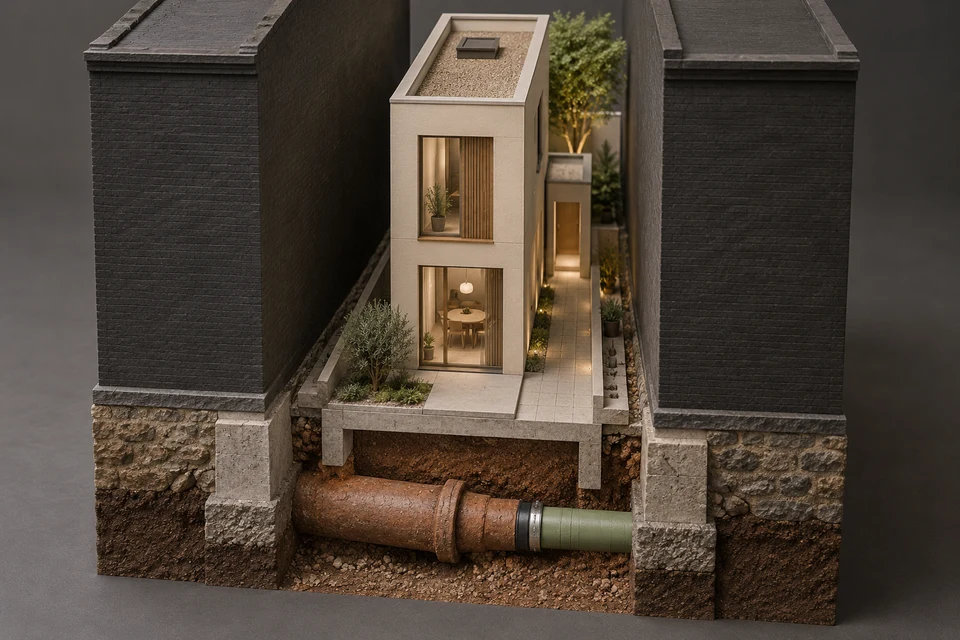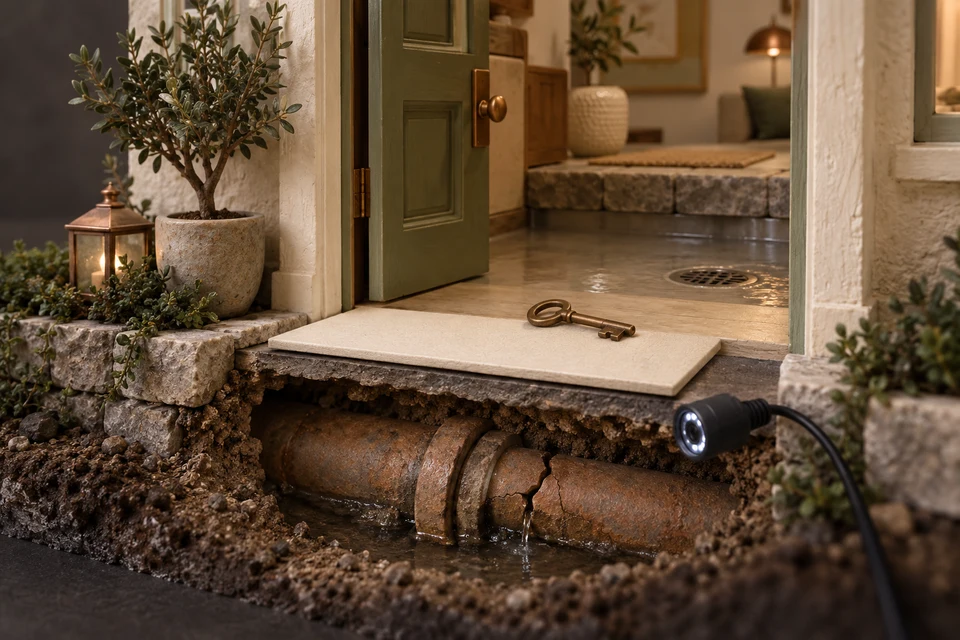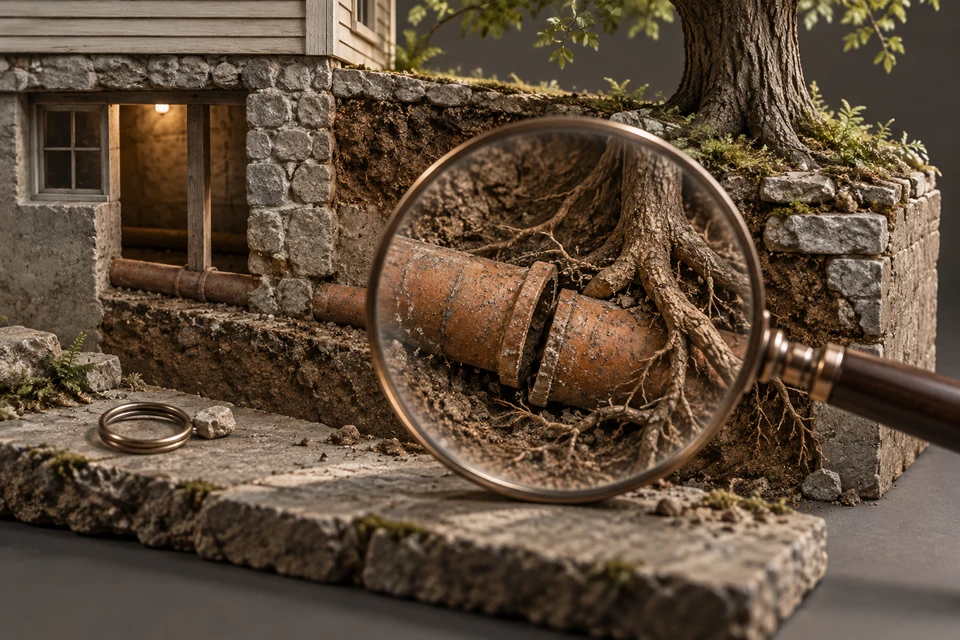
Alberta's mandatory new home warranty includes at least two years of coverage for defects in delivery and distribution systems, which the province describes as including plumbing. Whether a buried sewer line counts, and what a provider will pay, is decided under the provider's terms. Home insurance is different: it responds to sudden events and treats sewer backup as optional coverage. Wear on an old line is generally neither.
- Homes whose building permits were applied for after 1 February 2014 carry mandatory Alberta new home warranty coverage.
- The warranty is attached to the home, not the owner, so a resale buyer inherits whatever time is left.
- Plumbing falls under the two-year delivery and distribution coverage; ask the warranty provider how it treats the building sewer.
- Home insurance covers sudden events; sewer backup damage needs an optional endorsement, and gradual deterioration is commonly excluded.
- Third-party home warranty plans are service contracts; read what they say about buried lines before paying for one.
01 /Does a new home warranty cover the sewer line in Alberta?
It can, within the first two years and within the terms of the warranty provider. Alberta's New Home Buyer Protection Act sets minimum coverage for new homes: one year for defects in labour and materials, two years for delivery and distribution systems, five years for the building envelope and ten years for major structural components. The Government of Alberta's overview describes the two-year category as covering defects related to the electrical, plumbing, heating, ventilation and air conditioning systems.
The sewer line sits at the edge of that picture. The building drain and the buried lateral carry wastewater out of the house, but they run underground and partly outside the footprint of the building. How a particular warranty provider classifies a failure in that pipe, and whether any site-servicing component is treated differently, is something to confirm in writing with the provider named on the warranty certificate rather than assume.
| Coverage | Minimum period | Where a sewer issue might fit |
|---|---|---|
| Labour and materials | 1 year | Workmanship defects noticed early, such as a poorly seated joint at a cleanout |
| Delivery and distribution systems | 2 years | Plumbing defects, which is the category most sewer claims would be discussed under |
| Building envelope | 5 years | Rarely relevant to the pipe itself |
| Major structural | 10 years | Only if a failure affects the frame or foundation; the pipe is not structure |
02 /Which Calgary homes still have new home warranty time left?
Only newer ones. The provincial requirement applies to new homes where building permits were applied for after 1 February 2014, and the plumbing category lasts a minimum of two years. In practice that means the sewer question matters most for owners in their first two years and for buyers of homes that are only a year or two old.
The Government of Alberta states that a new home warranty is attached to the home, not the owner, and remains in effect on resale until the coverage expires. A buyer of a nearly new house therefore steps into the remaining term. The province's Residential Protection Program runs a public property registry that shows warranty information for homes and builders, which is the quickest way for a buyer to confirm the dates.
| Age of home | Likely warranty position for plumbing | What a buyer or owner should do |
|---|---|---|
| Under 1 year | Inside the two-year plumbing term and the one-year labour and materials term | Scope the line and report any defect to the warranty provider promptly |
| 1 to 2 years | Plumbing coverage may still be running | Check the exact expiry before possession; scope before it lapses |
| 2 to 10 years | Plumbing term likely expired; structural term may still run | Treat sewer defects as an owner cost unless the provider says otherwise |
| Permit before February 2014 | No mandatory provincial warranty | Budget for the line like any resale home |
03 /What sewer defects show up in newer Calgary homes?
New PVC sewer lines rarely fail from age, but they can be installed or disturbed badly, and the first years are when those faults surface. The patterns worth knowing are few and fairly distinct.
- A belly or sag, where trench backfill settled after construction and the pipe dipped, so water and solids sit in a low spot.
- An offset or pulled joint, often where settlement, frost or a later dig moved the pipe.
- Construction debris, such as concrete, grout or packaging, washed into the line during the build.
- Damage from later work, such as deck footings, fence posts, landscaping or a neighbour's excavation striking the lateral.
- A damaged cleanout or connection, cracked by equipment during grading or driveway work.
The City's service line records back up how young these lines are: in communities the City classes as 2000s, 95.7% of City-side service lines are PVC, and the 2010s and 2020s classes are almost entirely PVC. Those records cover only the City section, so the private side still needs a camera to confirm its condition.
04 /How does home insurance treat sewer problems differently?
Home insurance is built around sudden and accidental events, not the condition of a pipe. The Insurance Bureau of Canada says damage caused by the backing up of sewers and drains is typically not covered by a standard policy, and that optional sewer backup coverage is offered by most insurers. Some insurers also offer a separate service line endorsement for buried private lines.
The two can overlap after one event. If a construction defect in a two-year-old line causes a backup, the warranty provider may be the right door for the pipe, while the insurer handles water damage under an optional backup endorsement. Report to both promptly and let each decide what it covers, rather than choosing one yourself. For the cleanup side of a backup, SewageCleanup.ca walks through what happens in the house.
05 /Are home warranty plans worth it for a sewer line?
A third-party home warranty plan is a service contract, not insurance and not the statutory new home warranty. Plans vary widely in what they include, and underground lines are a common place for limits or exclusions to sit. Before paying, read the contract for these items:
- Whether the sewer line outside the foundation is covered at all, or only drains inside the house.
- The per-claim or annual cap, compared with the $4,500 to $12,000 planning range for a single spot repair in Calgary.
- Exclusions for roots, pre-existing conditions, clay or cast iron pipe, and excavation or restoration.
- Who chooses the contractor and whether you can use your own footage and quote.
- Waiting periods and cancellation terms.
Compare the premium over several years with the likely repair. For an older clay tile line, a plan whose cap sits well below a Calgary lining or replacement range, or that excludes pre-existing conditions, may pay very little toward the problem you are actually worried about.
06 /What should I do if a newer home's sewer line fails?
- Stop using water and protect people
Keep everyone away from sewage, and do not open cleanouts under pressure.
- Check the coverage dates
Find the warranty certificate or search the provincial registry to see whether the plumbing term is still running.
- Contact the warranty provider
Alberta's claims guidance is to confirm the claim falls within the coverage period and contact the warranty provider, who explains its procedures.
- Tell your insurer about any damage
Water or sewage damage inside the home is an insurance question even when the pipe is a warranty question.
- Get footage before any repair
A recorded camera run with distances is the evidence both the provider and the insurer are likely to ask for.
If the warranty has expired or the provider declines, you are pricing an ordinary repair. The Calgary Replacement Cost Estimator gives a planning range, and does insurance cover sewer line replacement covers the insurance side in more depth. Workmanship warranties on a replacement job itself are covered at SewerReplacement.ca. When you have footage, request quotes.
FAQQuestions people ask
Is the sewer line covered by the Alberta new home warranty?
Plumbing falls under the minimum two-year delivery and distribution coverage. Whether a particular buried sewer defect qualifies is decided under the warranty provider's terms, so ask the provider named on your certificate.
Does the new home warranty transfer when I buy a two-year-old house?
Yes. The Government of Alberta says the warranty is attached to the home and remains in effect on resale until the coverage expires.
How do I find out if a Calgary house has a new home warranty?
Search the Residential Protection Program's public property registry, and ask the seller for the warranty certificate and any claim records.
Will my home insurance pay for a sagging sewer line in a new house?
Usually not for the pipe. A sag is a gradual condition. Optional sewer backup coverage may pay for damage inside the home if a covered backup happens.
Should I buy a home warranty plan for an old clay sewer line?
Read the contract first. Many plans limit or exclude underground lines, pre-existing conditions and excavation, and caps can sit below Calgary repair ranges.
Who pays if a neighbour's construction damaged my new sewer line?
That is a question of fault rather than warranty. Document the damage with footage and dates, notify your insurer, and get legal advice if the other party disputes it.
NETWORKGo deeper across the HAUSE Sewer network
Does home insurance cover tree roots in a sewer line?
Does home insurance cover tree roots in a sewer line in Canada? Why root cutting and pipe repair are usually excluded, and what backup endorsements pay.
SewerCleaners.caSewer backup insurance in Canada: coverage, deductibles, condos and claims
Sewer backup insurance in Canada explained: what the endorsement covers, deductibles and limits, flood vs backup, condos, septic, and whether it is worth it.
SewerInspector.caSewer scope on a new build: what goes wrong in brand-new sewer lines
Is a sewer line inspection necessary for new construction? What goes wrong in new laterals, when to scope before warranty dates, and what to ask the builder.