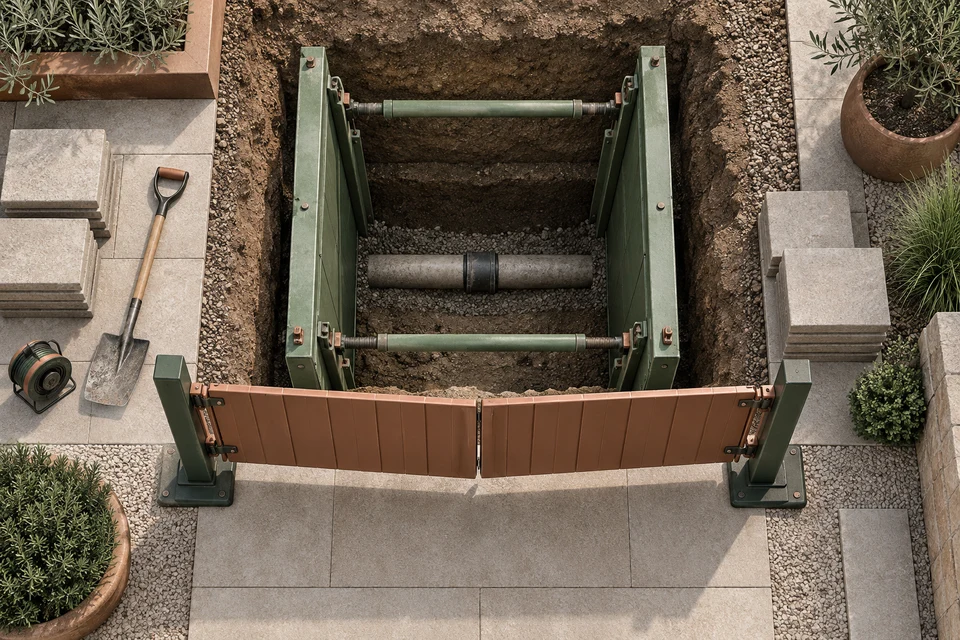
Possibly. Calgary's homeowner plumbing permit is open to a legal owner who lives in the home, or will, and does the work in person, and replacing sewer lines around a home needs a permit. The City's own portion past the property line is not yours to replace, and rentals do not qualify. Most of the cost is excavation, which few homeowners can do safely.
- The City requires a plumbing permit when water and sewer lines in or around a home are replaced.
- A homeowner permit requires you to be the legal owner, to live in the home or intend to, and to do the work yourself; rental properties are excluded.
- When checked in September 2026, the City listed the homeowner permit fee at $112 plus a 4% Safety Codes Council fee, a total of $116.50; fees rise each January.
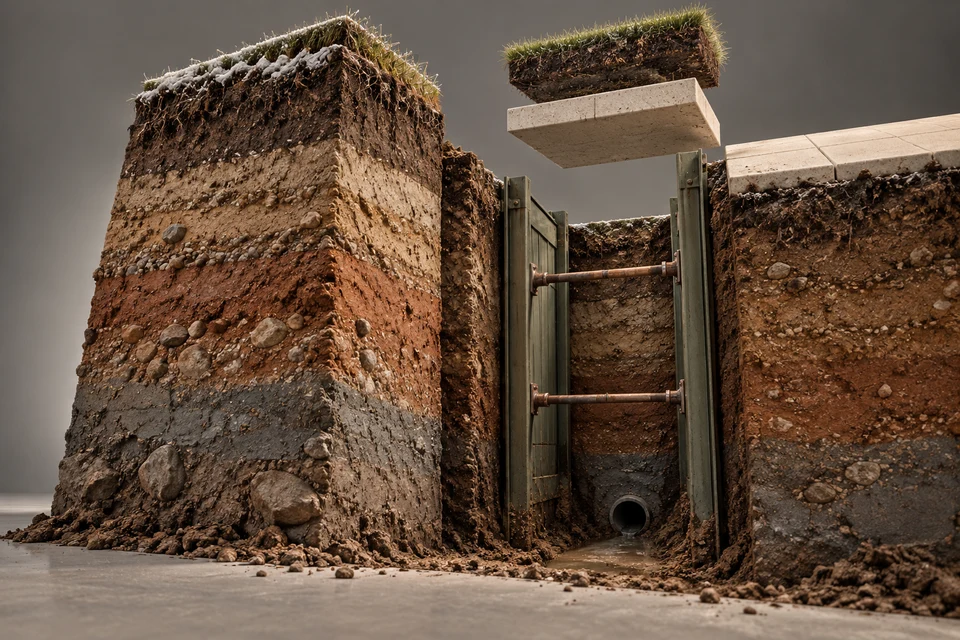
- Public locates do not mark your own sewer lateral, and trenches deeper than about 1.5 m generally need protection.
- The realistic saving for most owners is doing the prep and restoration, not digging a deep trench themselves.
01 /Can a homeowner replace their own sewer line in Calgary?
A Calgary homeowner can apply for a permit to do their own plumbing work, including sewer line replacement, if they meet the City's conditions. The City states that a plumbing permit is required when a plumbing system is constructed, extended or altered, and when water and sewer lines in or around the home are replaced. So the question is not whether a permit is needed, but whether you qualify for the homeowner version of it and can do the work to code.
| Condition | What it means in practice |
|---|---|
| Ownership | Your name is on title as the legal owner |
| Occupancy | It is your home now or will be; rental properties are excluded |
| Who does the work | You do it personally; the permit cannot be pulled for a friend, relative or company doing the job |
When we checked in September 2026, the City listed the homeowner's permit fee at $112 plus a 4% Safety Codes Council fee of $4.50, for $116.50. The City notes that fees are increased annually on January 1, so confirm the current amount before you apply.
02 /What can a homeowner not do?
- Replace the City's pipe. Under the City's published ownership split, the pipe from the main to the property line is owned and maintained by the City. Problems there go to 311.
- Work in the road or boulevard without City approval. Excavation in the City's right-of-way has its own requirements; ask 311 before you plan anything past the property line.
- Make new connections to the City's system casually. The City's guidance on installing water and sewer connections says only approved contractors that meet its Master Indemnification Agreement can perform that work.
- Use a homeowner permit on a rental. The City's conditions exclude rental properties.
- Skip inspections. The permit comes with inspections; the pipe must not be buried before it has been inspected where an inspection is required. Book through 311 or your online account.
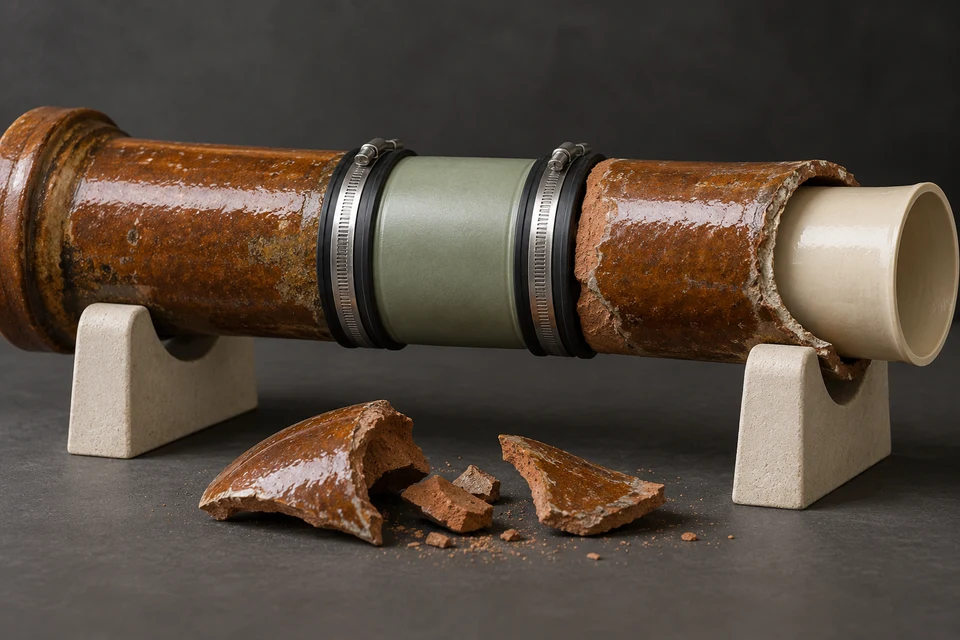
Work also has to meet the code. The City's homeowner permit page states that all installations must meet the most current requirements of the National Plumbing Code of Canada, and pipe material, slope, bedding, cleanouts and connections all have requirements. An inspector who finds a lateral laid without enough slope or on unsuitable bedding can require it to be redone, which is the most expensive way to save money.
03 /Does doing it yourself actually save money?
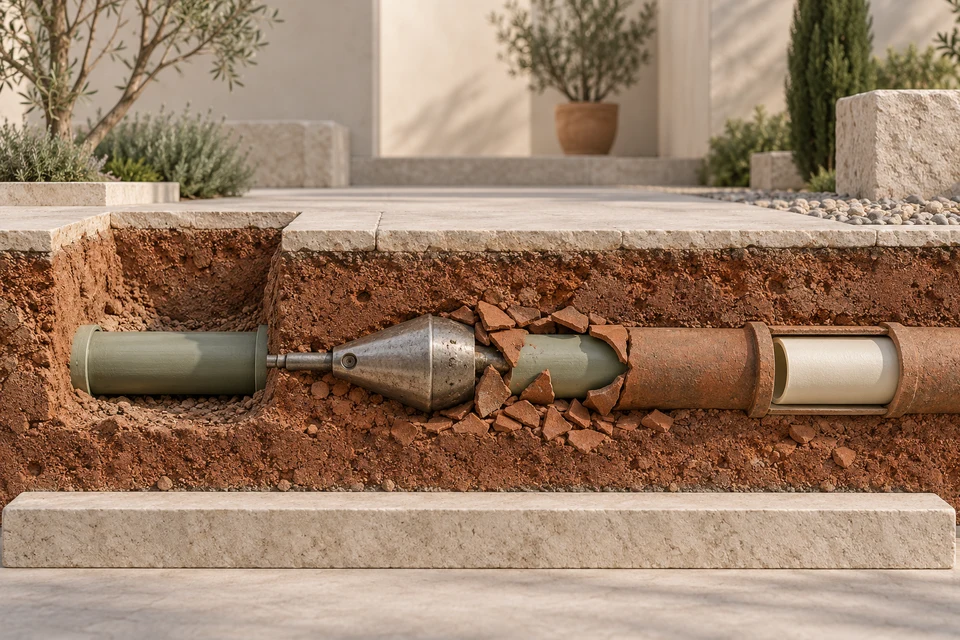
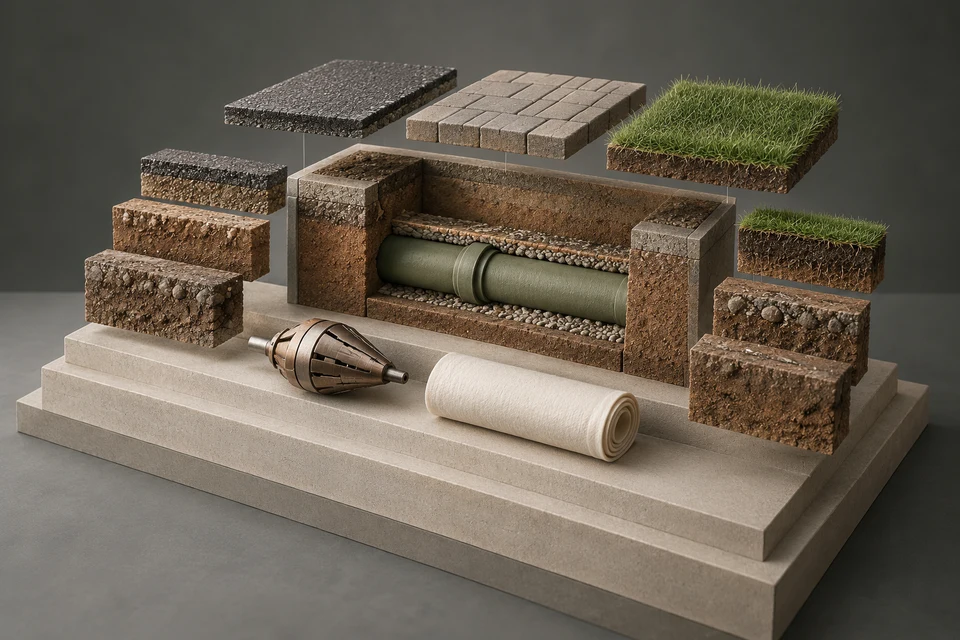
Less than most people expect. In a Calgary open-cut replacement, the pipe and fittings are a small share of the cost. The large items are the excavation equipment, trench protection, spoil handling, granular bedding and backfill, compaction, and restoration. A homeowner still pays for most of those, either by renting equipment or by hiring parts of the job out.
| Item | Can a homeowner avoid it? | Comment |
|---|---|---|
| Permit and inspections | No | Required for sewer line replacement |
| Public utility locates | No | Must be requested before digging |
| Private locate of the lateral | Rarely | A camera with a sonde and a locator; usually hired |
| Excavator and operator | Partly | Rental is possible, but operating near buried utilities takes skill |
| Trench protection | No, for deeper trenches | Sloping, benching or a trench box |
| Spoil disposal and granular fill | No | Trucking and material costs |
| Pipe, fittings, couplings, cleanout | No | The cheapest part of the job |
| Labour | Yes | This is the saving |
| Restoration | Yes | A realistic place for owners to save |
For comparison, a contractor's open-cut replacement of a 15 m lateral at typical depth under lawn plans at $14,250 to $30,500 in Calgary. Labour is a large part of that, but so are the items you cannot avoid. Add the value of your own time, the risk of a failed inspection and the cost of any damage, and the net saving on a deep lateral is often modest.
04 /What is the realistic DIY role for most homeowners?
Most Calgary homeowners who want to save money do the parts of the job that carry little risk and leave the trench to a crew. That hybrid approach is honest about where the danger and the skill lie.
- Clear the work area
Move plants, pavers, fencing and anything stored over the line before the crew arrives.
- Prepare the inside
Expose the floor cleanout and clear space around it; the City's own backup guide asks for about two metres clear in front of a cleanout for crews to work.
- Take on restoration
Topsoil, seed or sod, planting beds and paver edging can be done by the owner once the trench is backfilled and compacted.
- Handle the paperwork
Collect the camera videos, permit record and warranty into one file.
Ask contractors to price the job with and without restoration so the saving is visible. The Calgary Replacement Cost Estimator shows how much surface restoration adds for landscaping, concrete or a basement floor.
05 /What safety limits apply to a homeowner dig?
The same physical hazards apply whether the person digging is a contractor or an owner. They are why most owners stop at the edge of the trench.
- Locates first. Utility Safety Partners asks that locate requests be placed at least three full working days before a project starts. Lines a customer owns, your own water and sewer services among them, are not in its system, so your lateral needs a private locate.
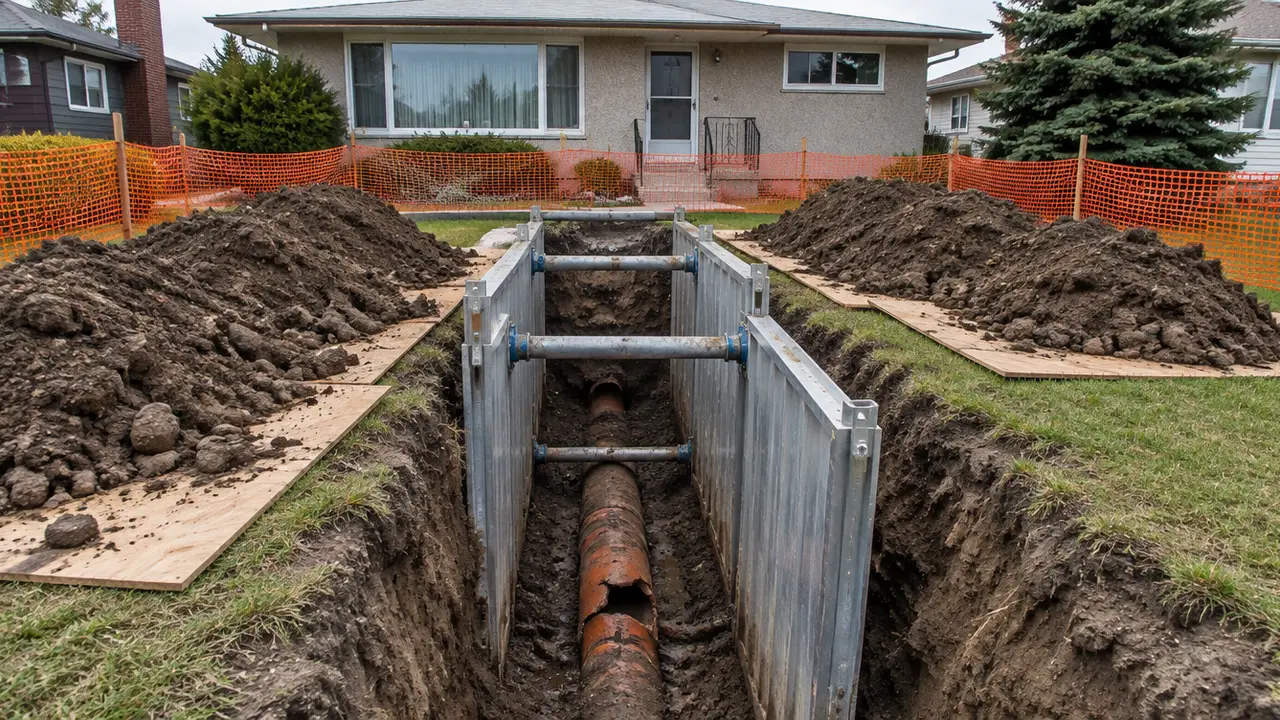
- Trench collapse. Trenches deeper than about 1.5 m generally need sloping, benching or a trench box under Alberta occupational health and safety rules. Soil is heavy; a partial collapse can trap and crush.
- Sewer gas. Opening an old line can release gases including hydrogen sulphide. Ventilate, never work alone in a pit, and get out if the smell is strong.
- Silica dust. Cutting clay or concrete pipe releases dust that can contain crystalline silica; use wet cutting or extraction and respiratory protection.
- Sewage. Wear gloves and boots, keep cuts covered and wash thoroughly.
06 /Are there smaller sewer jobs a homeowner can reasonably take on?
Yes, with a permit where one is required. Interior drain work above the basement floor, installing an accessible cleanout, and some backwater valve installations are within reach of capable owner-occupiers. Breaking a basement slab to reach the building drain is heavy, dusty work but not a deep trench. Removing a blockage in the drainage does not need a permit, according to the City, but running a powered cable machine has its own injury risks.
Whatever you take on, a camera video before and after is cheap insurance: it proves what you found and what you left. If you would rather have contractors price the job, request quotes and ask for a restoration-excluded option. For what drives the professional price, read why sewer line replacement is expensive.
FAQQuestions people ask
Does replacing my sewer line in Calgary need a permit?
Yes. Sewer line replacement around a home is permitted plumbing work in Calgary, whoever does it.
Can I get a homeowner plumbing permit for a rental?
No. The City's homeowner permit requires the owner to live in the home or intend to, and states the home cannot be a rental property.
How much is a homeowner plumbing permit in Calgary?
When checked in September 2026, the City listed $112 plus a 4% Safety Codes Council fee, $116.50 in total. Fees rise each January 1, so confirm the current amount.
Can I replace the City's part of the sewer line?
No. The City's published position is that the pipe from the main to the property line is owned and maintained by the City. Report problems there through 311.
Will Utility Safety Partners locate my sewer line?
No. Customer-owned lines, including sewer service lines, are not registered with Utility Safety Partners. You need a private locate for your own lateral.
How much can I save by doing it myself?
Mainly the labour. Permits, locates, equipment, trench protection, disposal and materials remain. For a deep lateral, the net saving is often modest compared with the risk.
NETWORKGo deeper across the HAUSE Sewer network
Sewer line locating and depth: how the mark on your lawn is made
How sewer line locating and depth readings work: the sonde, the hand-held locator, peak and null readings, marking, accuracy, and calling before you dig.
SewerRoots.caWhose tree, whose pipe: who pays when roots block a sewer line
Who is responsible when a city or neighbour's tree sends roots into your sewer line: the general Canadian pattern, the evidence, and how to raise it.
SewerJetting.caHow to use a drain jetter: a safety-first walkthrough for rental units
How to use a drain jetter or rented sewer jetter: setup, nozzle choice, feeding and pulling hose, and the stop rules that help prevent injection injuries.