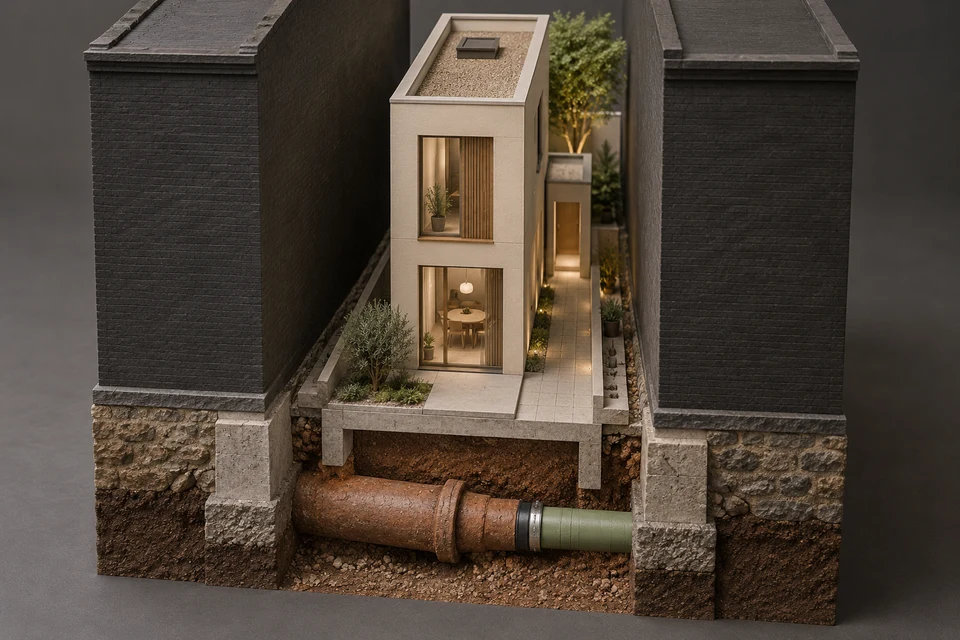
When a Calgary lot is redeveloped, the old sewer service is either reused, replaced on the private side or replaced with a new connection to the main, depending on its condition and the City's requirements. The City says builders and homeowners provide connections from the property line to the plumbing, at their own expense, using approved contractors, and the City inspects. Budget for City-side work until the City confirms otherwise.
- An infill lot's existing service may be reusable, but only after a camera inspection and confirmation of the City's requirements.
- The City says private-side utility site servicing is owned by, built for and paid for by the builder or homeowner, using contractors that meet the City's requirements.
- Redeveloping inner-city communities show City-side median install years decades later than their original build-out, consistent with services renewed as lots were rebuilt.
- City-side connection work adds $3,000 to $15,000 in the Calgary estimator; road excavations with traffic control can cost more.
- Neighbours of an infill build should record their own sewer line on video before excavation starts next door.
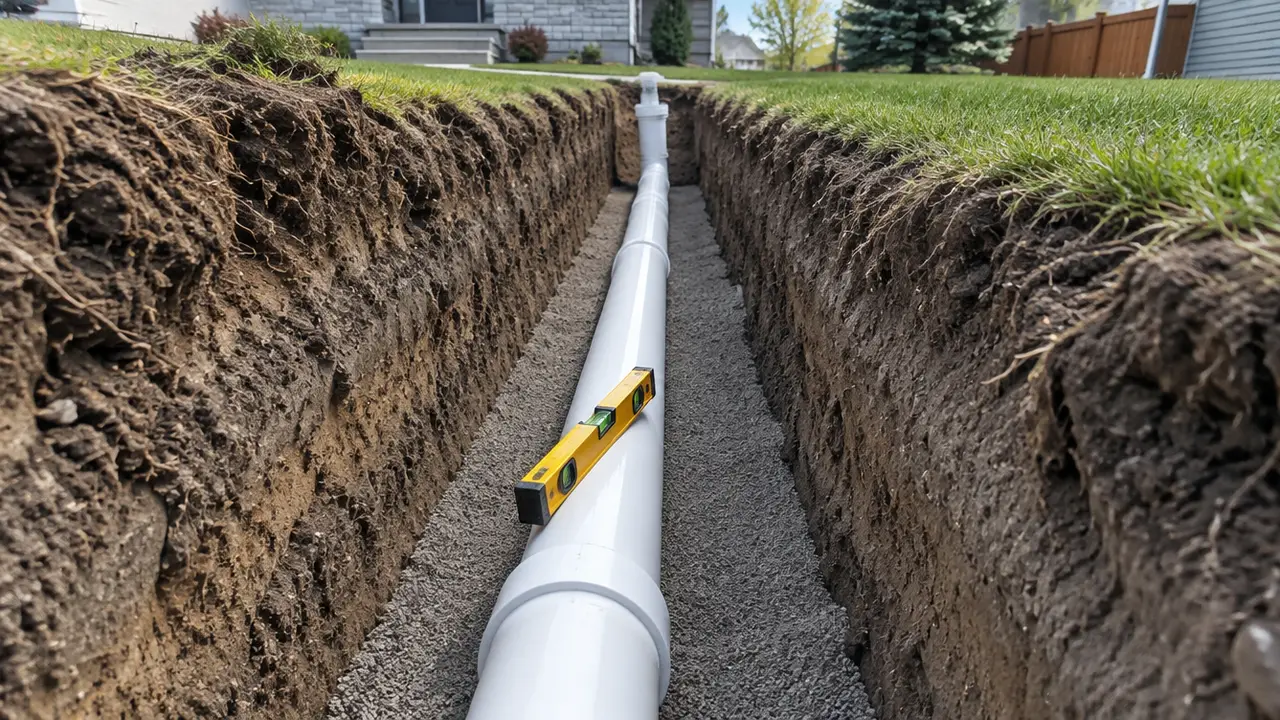
01 /What happens to the sewer service when a Calgary lot is redeveloped?
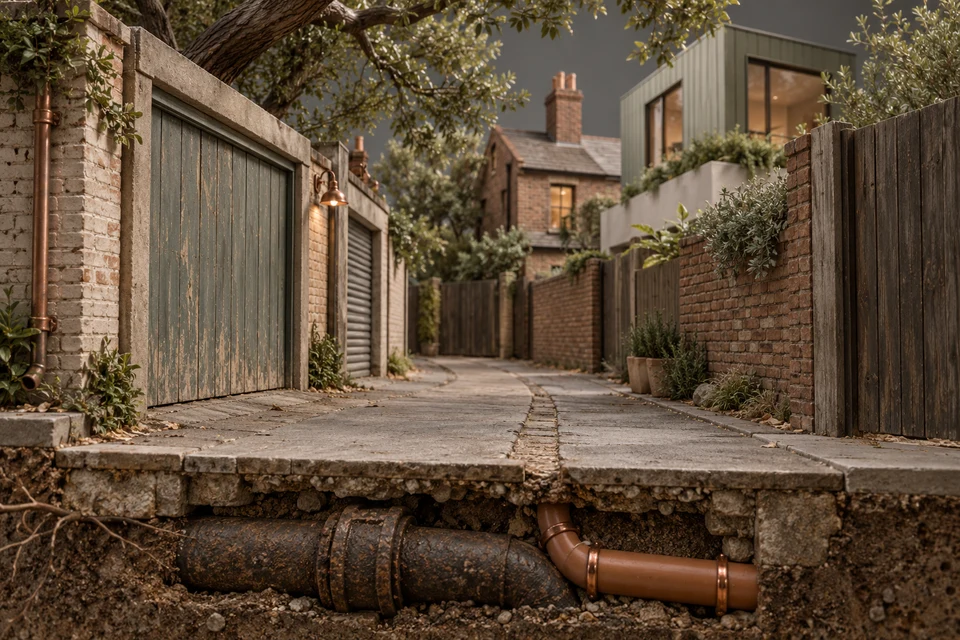
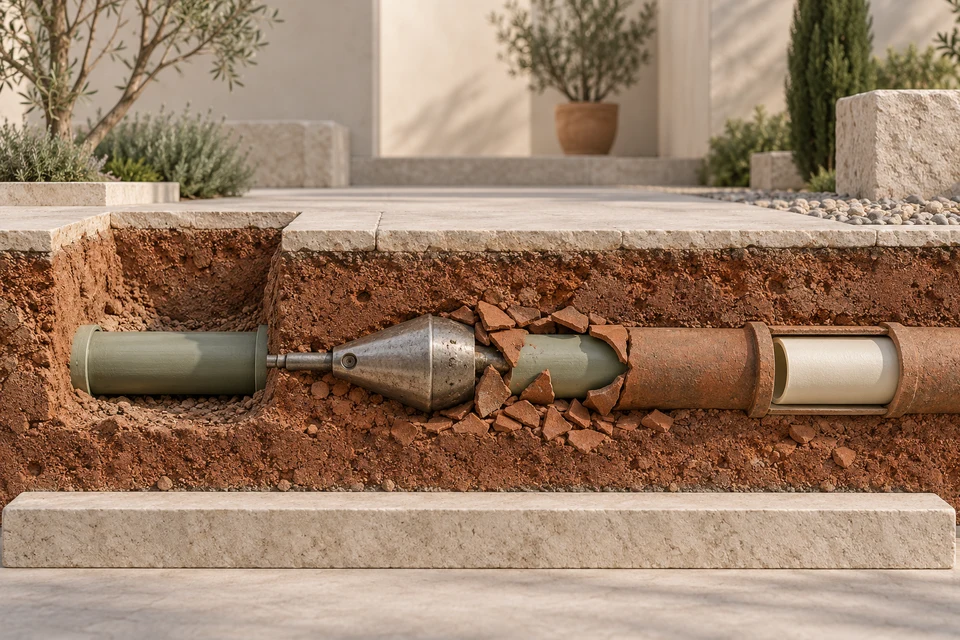
When an older Calgary house is demolished for an infill, the sewer service goes one of three ways. It may be reused if it is in good condition, the right size and acceptable to the City; the private portion may be replaced and connected to the existing City-side service; or a new service may be installed to the main, which brings City-side work into the project. Which path applies is settled during development approvals, not on site.
| Path | When it tends to apply | Cost exposure |
|---|---|---|
| Reuse the existing service | Service in good condition and suitable for the new building | Camera inspection and any cleaning; lowest |
| Replace the private portion | Private side old or failing; City side acceptable | Private-side open cut or trenchless |
| New service to the main | Old service unsuitable, relocated, or the lot is split into more units | Private side plus City-side work, which can include a road or lane excavation |
02 /What does the City say about installing sewer connections?
The City of Calgary's page on installing water and sewer connections sets out the general division of work. Builders or homeowners are responsible for providing the water and sewer connections from the property line to the residential or commercial plumbing system. Utility site servicing installations on private property are owned by the builder or homeowner and built by their contractor at their expense.
- Contractors must meet City requirements. The City says only approved contractors that meet its Master Indemnification Agreement can perform this work, and it provides information on pre-qualified contractors.
- Standards apply. Installations must comply with the City's standard specifications for water services and sewer construction and with the applicable bylaws.
- The City inspects. It inspects the installation to confirm compliance with its specifications and the approved plans.
- The page is guidance. The City notes that the information has no legal status; the bylaws and codes govern.
Separately, the City requires a plumbing permit when water and sewer lines in or around a home are replaced, and its homeowner permit is available only to owner-occupiers doing their own work. On a redevelopment, the builder's contractors handle permits.
03 /What does the City's data show about redeveloping communities?
The City's service line records show the footprint of decades of redevelopment. Several established central communities that were largely built out by the 1960s or earlier now have median City-side install years in the 1990s and 2000s and PVC shares well above the inner-city average of 41.6%. That pattern is consistent with services being renewed as lots were rebuilt, though the data does not record why a line was replaced.
| Community | Lines | Median year | % PVC | % cast iron | % relined |
|---|---|---|---|---|---|
| Altadore | 2,239 | 2007 | 68.7 | 11.1 | 0.4 |
| Parkdale | 766 | 2005 | 58.2 | 9.0 | 0.0 |
| Mount Pleasant | 2,273 | 2004 | 45.6 | 8.7 | 11.2 |
| Richmond | 1,815 | 1999 | 56.9 | 7.7 | 0.6 |
| West Hillhurst | 2,294 | 1998 | 54.7 | 14.2 | 4.3 |
| Killarney/Glengarry | 2,348 | 1996 | 51.1 | 15.4 | 3.0 |
| Hillhurst | 1,451 | 1990 | 48.1 | 9.7 | 3.9 |
| South Calgary | 1,071 | 1989 | 50.3 | 14.8 | 0.0 |
For a buyer on an unredeveloped lot in these communities, the takeaway is that the house next door may have a 2010s PVC service while yours still has the original. For a builder, it is a reminder that the City side in front of an older house may be anything from original cast iron to a recent liner; the inner city page covers those communities in more depth.
04 /How should an infill budget treat the sewer service?
Treat the sewer service as a line item with a range, not a single figure, until the camera and the City have spoken. The Calgary estimator's planning ranges give a starting point for the private side, and City-side work sits on top.
| Item | Planning range | Notes |
|---|---|---|
| Camera inspection of the existing service | $250–$600 | Worth doing before demolition decisions are final |
| Private side, 15 m open cut, typical depth, open site | $14,250–$30,500 | Often less on a cleared lot with no restoration |
| Private side, 15 m, deep | about $17,800–$38,125 | Deep services are common where basements are deep |
| City-side connection work | $3,000–$15,000 | Road or lane excavation with traffic control can exceed this |
On a cleared lot, restoration costs largely disappear, because the site will be rebuilt anyway, so open cut often beats trenchless for the private side. The reverse is true when a service must be replaced under an existing house or a neighbour's driveway. Price both where either is possible, using the Calgary Replacement Cost Estimator.
05 /What should I check before buying a Calgary lot to redevelop?
- Scope the existing service even if you plan to demolish; if it can be reused, that is money saved.
- Read the City-side record for the address; the lookup in the Home Buyer Sewer Risk Check shows the material and year for the City's portion.
- Ask the City early what servicing it will require for the building you plan, including whether each unit needs its own service.
- Check where the main is, in the street or the lane, since that sets the route and length of any new service.
- Budget a City-side contingency until the requirements are confirmed.
If the lot is being sold as a teardown, the sewer rarely changes the price much, but a builder will factor a new service into what they can pay. A seller who can hand over a camera video saves the buyer a step.
06 /I live next to an infill build. How do I protect my sewer line?
Record your own line before the digging starts next door. A camera video of your lateral with distances, dated before excavation, is the simplest evidence you can have if a problem appears afterwards. In older semi-detached houses and some older lots, services can run close to the property line or even be shared, so ask the builder how they will locate and protect adjacent services.
- Get a pre-construction scope of your line and keep the file.
- Ask the builder for their site contact and how utility and private locates will be handled.
- Watch for new gurgling, slow drains or wet spots in the yard during and after construction.
- If a problem appears, camera the line again and compare it with the earlier video before anyone argues about cause.
If your line and your neighbour's share any part of the route, do houses share sewer lines explains how that affects responsibility and cost. To get a pre-construction scope or quotes for your own service, request one here.
FAQQuestions people ask
Can an infill reuse the old sewer service?
Sometimes, if a camera inspection shows it is in good condition and the City accepts it for the new building. Confirm requirements with the City during approvals.
Who pays for the sewer connection on a Calgary infill?
The City says builders or homeowners provide connections from the property line to the plumbing, on private property at their own expense. Ask the City what is required on the City side for your project.
Does each unit of a new semi or duplex need its own sewer service?
Servicing requirements are set by the City for each development. Ask during approvals rather than assuming.
Why do some old Calgary communities show recent sewer install dates?
Many inner-city lots have been redeveloped, and new services were installed as houses were rebuilt. The City's data shows the install date but not the reason.
Should I scope my line before the neighbour's infill starts?
Yes. A dated video of your line before excavation next door is the clearest evidence if a problem appears later.
NETWORKGo deeper across the HAUSE Sewer network
New sewer line cost: new connections, infill services and septic-to-sewer
New sewer line cost in Canada (2026): CAD planning ranges for new house connections, infill services and septic-to-sewer conversions, plus fees to confirm.
SewerInspector.caHow a sewer camera inspection works, step by step
How a sewer camera inspection works, start to finish: access points, push vs crawler cameras, the footage counter, sonde locating and what limits the view.
SewerRoots.caRoots in the main sewer line: is it your lateral or the city's sewer main?
Roots in the main sewer line: how to tell your own lateral from the city sewer main, clues that point to the public side, and who to call first.