For a Calgary rental, the owner is responsible for the private sewer line from the property line to the building. The City's homeowner plumbing permit is not available for rental properties, so the work goes to a contractor under its own permit. Older rentals with clay or cast iron laterals deserve a scope, a written plan and a reserve, because a backup in a basement suite is costly.
- The City's homeowner plumbing permit requires the owner to live in the home, so rental sewer work is done by contractors who pull the permit.
- A basement suite adds fixtures, flow and a finished lower floor, which raises both the chance and the cost of a backup.
- A reserve of roughly $1,000 to $3,000 a year covers a $10,000 to $30,000 lateral fix within a decade, as planning arithmetic.
- Tenants need clear instructions for a backup: stop water use, stay safe, and call you and, if the street is affected, 311.
- Whether a sewer repair is a current expense or a capital improvement for tax purposes is a question for your accountant.
01 /Who is responsible for the sewer line in a Calgary rental?
The property owner is. The City of Calgary's published split applies to rentals exactly as it does to owner-occupied homes: the City owns and maintains the service line from the sanitary main to the property line, and the property owner owns and maintains it from the property line to the building. Tenants do not own any part of it.
What a tenant may be responsible for is damage caused by misuse, such as a blockage from wipes or grease, depending on the lease and Alberta's residential tenancy rules. That distinction matters for who pays to clear a clog. It rarely matters for replacement, because a lateral that needs lining or replacement has almost always failed from age, roots or ground movement rather than anything a tenant did.
02 /Can a landlord do their own sewer work under a homeowner permit?
No. The City of Calgary's homeowner plumbing permit is available only when you are the legal owner, you live in the home or intend to, and you are doing the work yourself. The City states the home cannot be a rental property. For a rental, a qualified contractor pulls the plumbing permit and books the inspections.
The City also requires a plumbing permit when water and sewer lines in or around a home are replaced, so rental sewer replacements are permitted jobs. Ask each contractor to confirm who is pulling the permit, and keep the permit and inspection records in the property file; they matter at refinance and sale.
03 /How do basement suites change the risk?
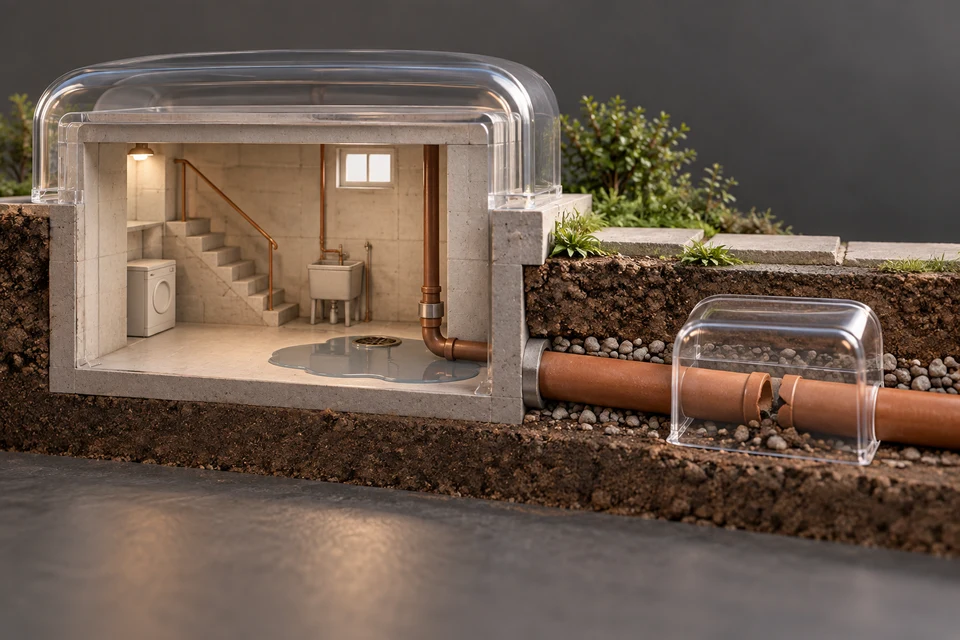
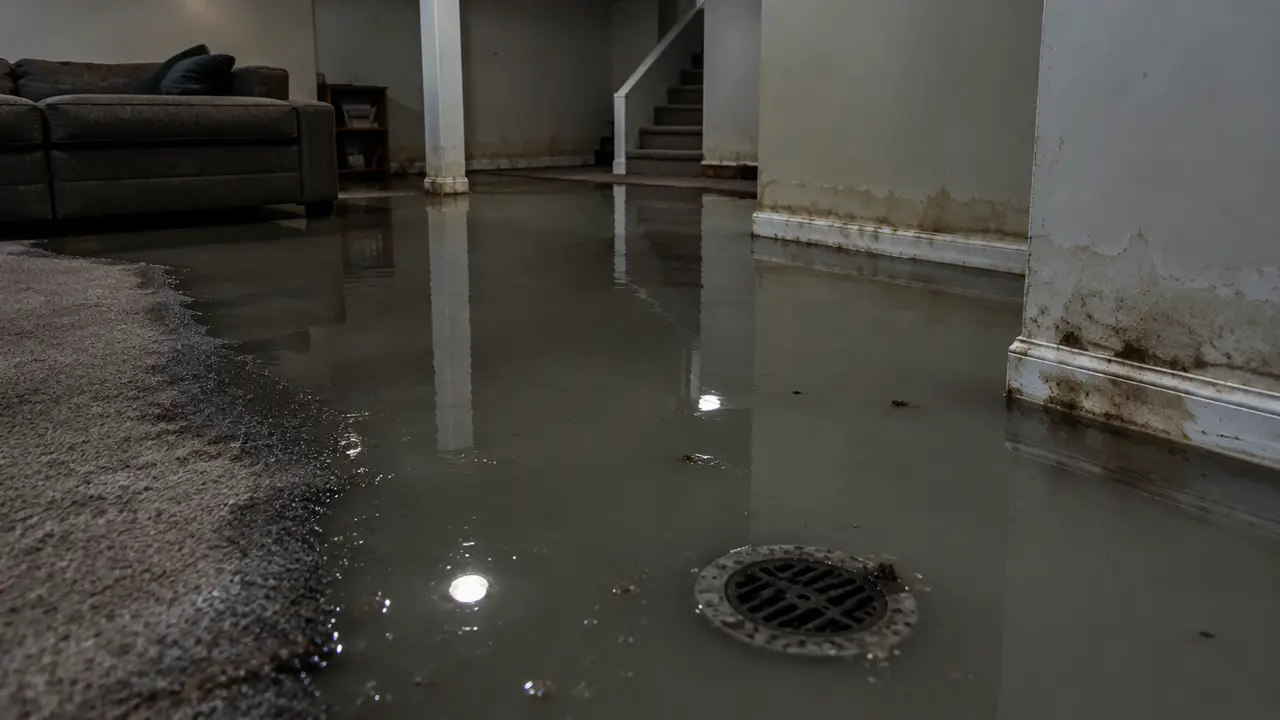
A basement suite concentrates the downside of an old sewer line. The suite adds a kitchen, a bathroom and often laundry to the lowest level of the house, which means more flow through the building drain, more grease, and fixtures sitting below the level where a backup first appears. It also puts finished flooring, drywall and a tenant's belongings exactly where sewage surfaces.
- Keep the main cleanout accessible. The City's backup guide notes that if a cleanout is covered by carpet, a false floor or drywall, the customer is responsible for providing access. In a suited basement, plan an access panel.
- Consider a backwater valve on below-grade fixtures, which the City of Calgary recommends to help prevent sewage damage.
- Brief the tenant on what not to flush or pour, and on what to do in a backup.
- Camera the line before finishing or renovating a suite, not after.
04 /How much should a landlord budget for an older sewer line?
Budget as if the line will need a permanent fix within the time you expect to own the property, and let the camera tell you whether that is next year or twenty years away. For a typical 15 m Calgary lateral, 2026 planning estimates are $10,000 to $26,250 to line and $14,250 to $30,500 to replace by open cut at typical depth under lawn.
| Expected fix | Horizon | Annual reserve |
|---|---|---|
| $10,000 (lower-end lining) | 10 years | $1,000 |
| $20,000 (mid-range) | 10 years | $2,000 |
| $30,000 (replacement with harder restoration) | 10 years | $3,000 |
| Maintenance jetting while you wait | Every 1–2 years | About $225–$1,100 a year |
Add the cost of a disrupted tenancy to the comparison. A backup in a suite can mean cleanup, lost rent while the unit is restored, and a strained relationship with a good tenant. A planned lining job in July, with notice to tenants, is almost always cheaper than an emergency in February.
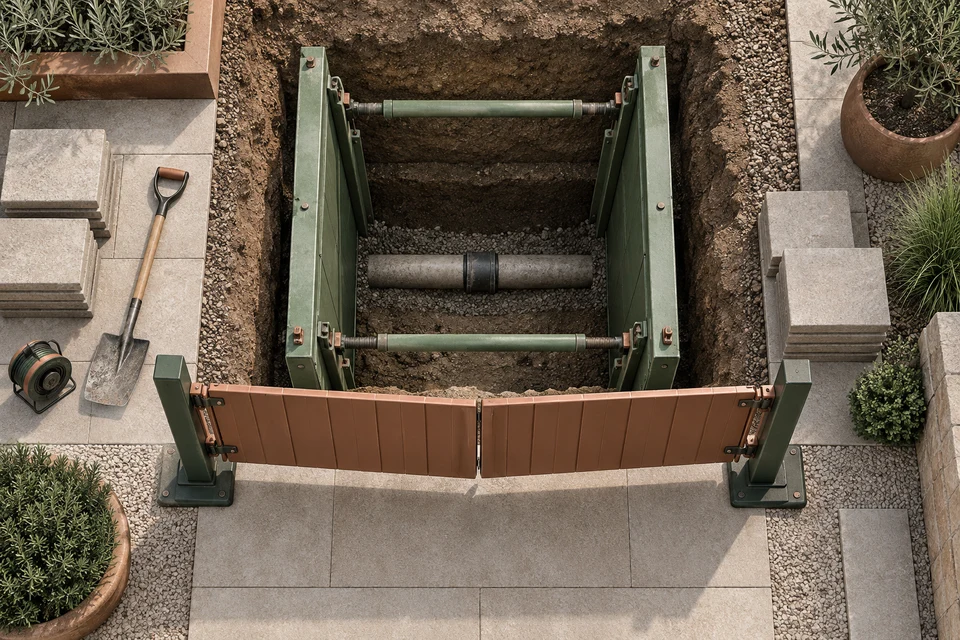
Plan the work around the tenancy as well as the season. Lining usually needs water use stopped for part of a day and access to the basement cleanout; open cut can take one to several days with the yard fenced off. Give tenants written notice of the dates, how long water will be off, and where the crew will work, and schedule around move-in and move-out dates so an empty unit absorbs the disruption where possible.
05 /What should tenants do in a sewer backup?
Give every tenant written instructions at move-in and post a copy near the basement cleanout or laundry. A clear plan limits damage and keeps people safe.
- Stop water use
No flushing, laundry, dishwasher or showers anywhere in the building, including the other unit.
- Stay safe
Keep away from sewage and from electrical equipment near water. Leave if water is near the panel or furnace.
- Call the landlord
Give a 24-hour number and a backup contact.
- Call 311 if the street is affected
Sewage in the street, an overflowing manhole or neighbours backing up point to the City main.
- Document
Photos and video before cleanup help both the landlord's claim and the tenant's own contents insurance.
Remind tenants that their own contents are generally covered only by their own tenant insurance, and that sewer backup coverage is often an optional add-on on those policies too. Does insurance cover sewer line replacement explains the landlord's side.
06 /What should I check when buying a Calgary revenue property?
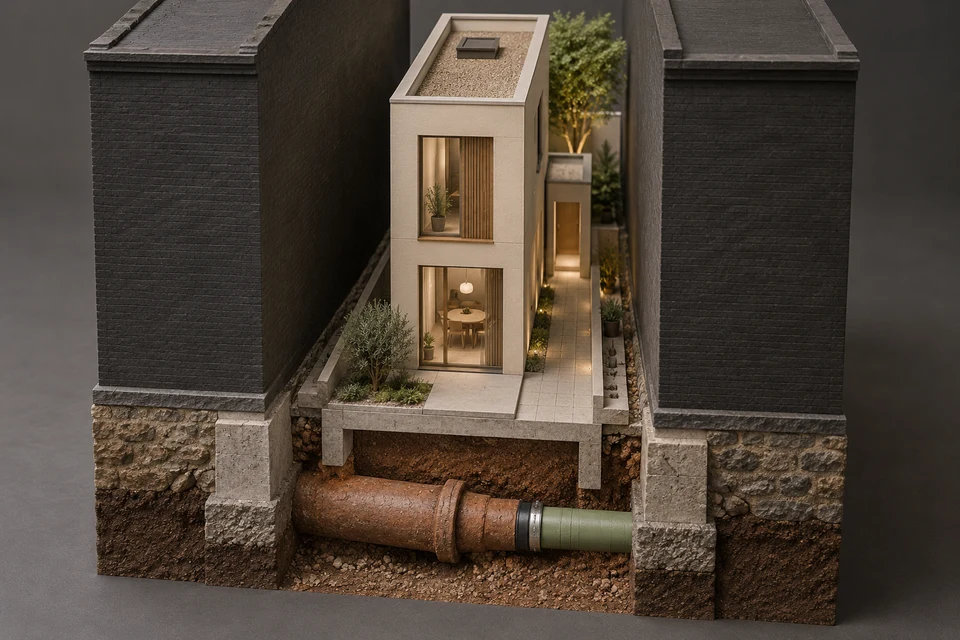
Scope it before you go firm, every time. Revenue properties are often older houses in established communities, where the City's records show clay tile and cast iron are common, and suites increase the stakes. Use the Home Buyer Sewer Risk Check; with a clay line, a pre-1980 build year, trees and a finished suite, most older revenue houses start in the High band before a scope.
- Ask for the seller's maintenance invoices; rentals with recurring root problems often have a trail of clearing calls.
- Check whether both units drain through one lateral, which is normal for a house with a suite, and whether a semi-detached or duplex shares anything with the neighbour. See do houses share sewer lines.
- Confirm any suite was permitted; unpermitted plumbing in a suite can complicate sewer work later.
- Price the fix before you set your offer, and include it in your cash-flow model.
07 /How is a sewer repair treated for tax on a rental?
Ask your accountant. In general terms, the Canada Revenue Agency distinguishes current expenses, which restore a property to its original condition and may be deductible in the year incurred, from capital expenses, which provide a lasting benefit or improve the property beyond its original condition and are generally depreciated over time. Where a sewer repair falls depends on the facts, such as whether it restores the existing line or upgrades it, and on how the work is documented.
Keep the invoice detailed: method, length, what was replaced and why, and the before and after video. Good records help your accountant, your insurer and your eventual buyer. For costs by method, see sewer line replacement cost in Calgary; for paying for it, financing sewer line replacement. When you want written prices, request quotes.
FAQQuestions people ask
Is the landlord or tenant responsible for a sewer line in Calgary?
The property owner is responsible for the private line from the property line to the building. A tenant may be responsible for damage caused by misuse, depending on the lease and Alberta's tenancy rules.
Can I replace the sewer line in my rental myself?
Not under the City's homeowner permit, which requires the owner to live in the home and states the home cannot be a rental. A contractor pulls the permit for rental work.
Does a basement suite increase sewer backup risk?
It adds flow, fixtures and grease on the lowest level, and puts finished space where a backup appears first. A scope, an accessible cleanout and a backwater valve all help.
How much should I set aside for an old sewer line in a rental?
As planning arithmetic, $1,000 to $3,000 a year covers a $10,000 to $30,000 lining or replacement within ten years, plus maintenance in the meantime.
Is a sewer replacement tax deductible for a rental?
It may be a current expense or a capital expense depending on the facts. Ask your accountant and keep detailed invoices and video.
NETWORKGo deeper across the HAUSE Sewer network
Scope the sewer before you renovate, finish the basement or landscape
Why to get a sewer inspection before renovation, basement development, a suite or landscaping: what to check, when to book it, and how findings change plans.
SewerCleaners.caBackwater valve installation: whether you need one, where it goes and how it is done
Should you install a backwater valve? When one is required, how it differs from a sump pump, how installation works, where it goes, costs and subsidies.
SewerQuotes.comSewer permits, inspections and who pays: owner or city?
Sewer line permits and who pays in Canada: the usual owner vs city split, permit and inspection costs, road cuts, city tree roots and what to confirm.